
Summary
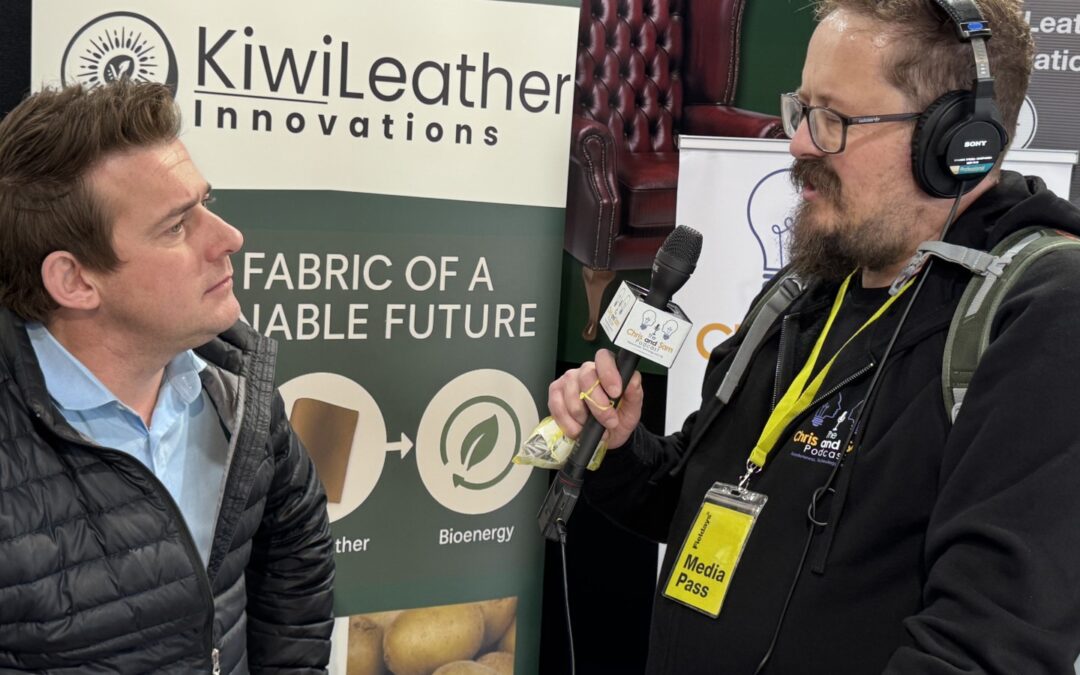
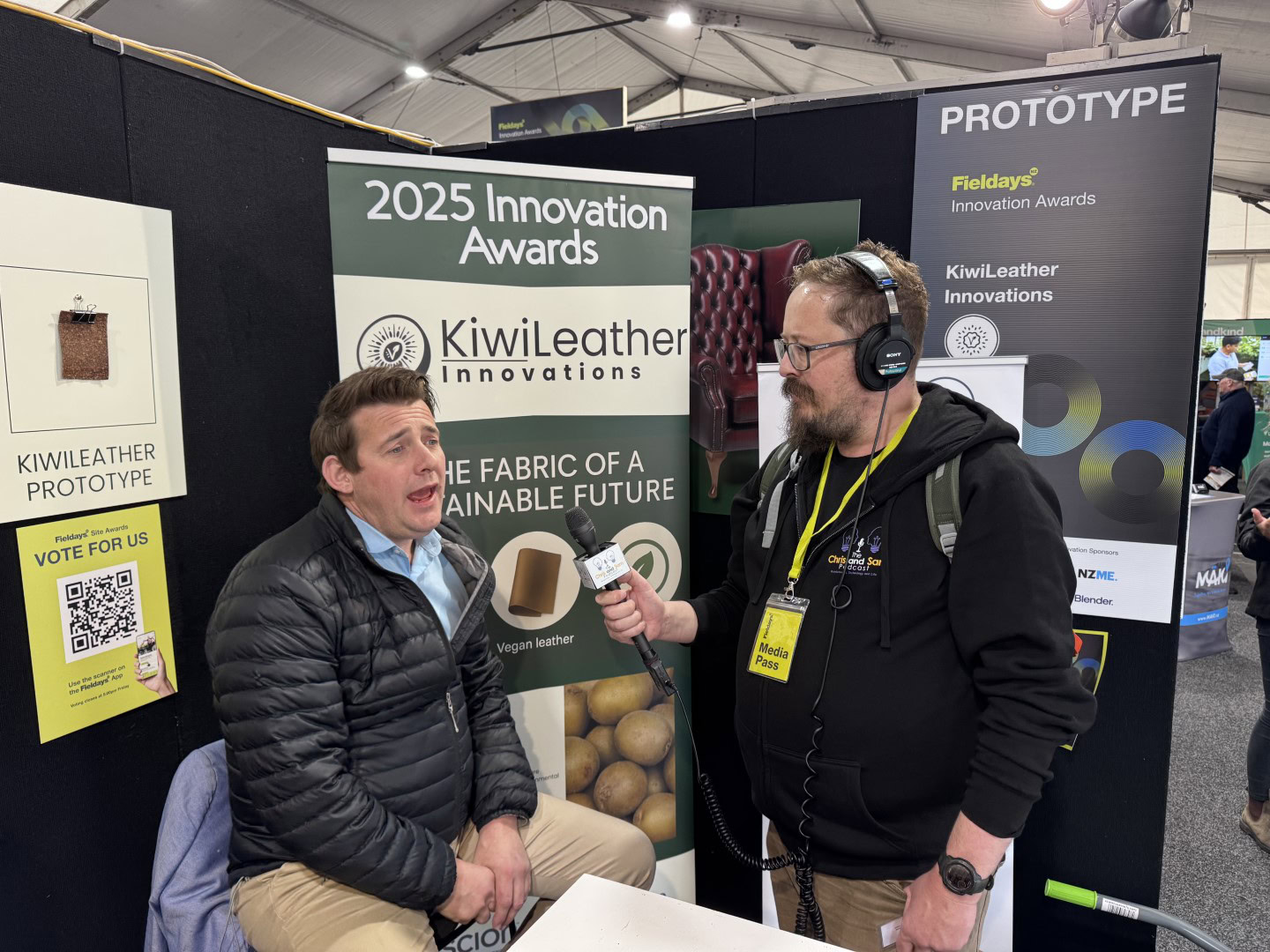
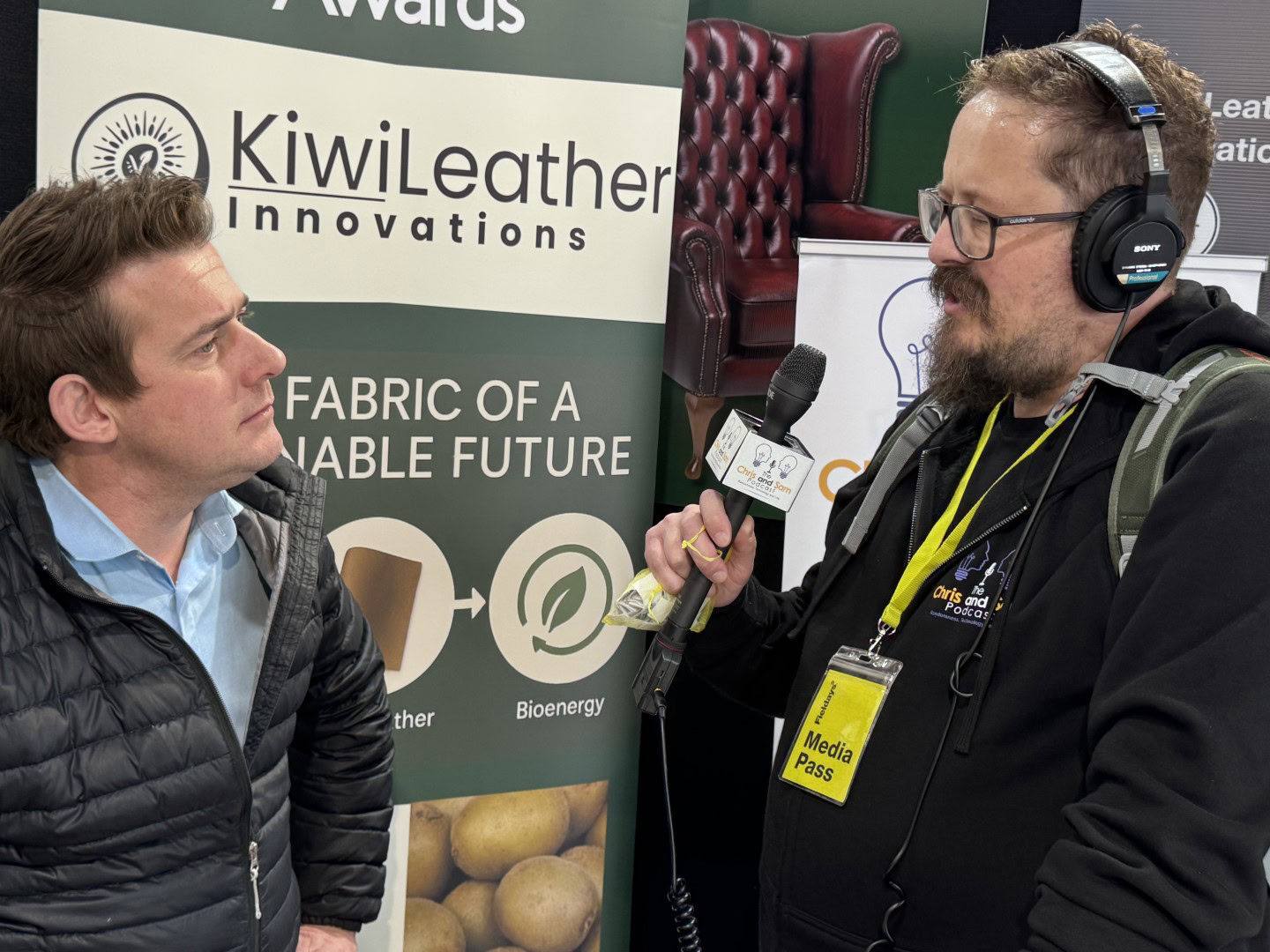
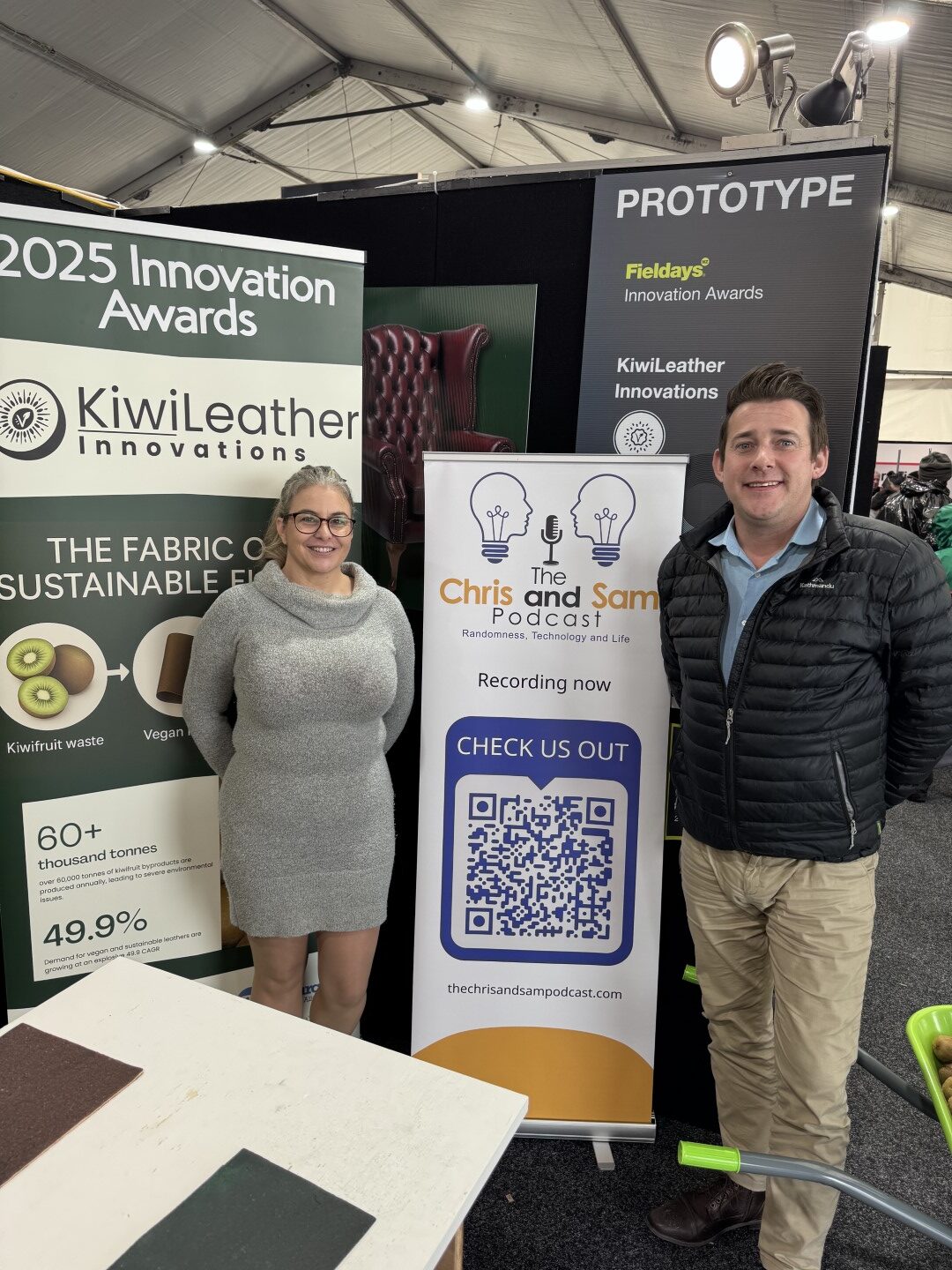
This episode from Fieldays 2025 Sam chats with Chris from Kiwi Leather Innovations – the visionary team turning surplus kiwifruit into high-quality, eco-friendly vegan leather right here in New Zealand. 🥝👜
Discover how Kiwi Leather Innovations is tackling food industry waste, collaborating with scientists at Scion, and pushing the boundaries of sustainable materials with their creative approach. Chris gives us the inside scoop on the challenges (including breaking pasta machines!), the process, and their exciting plans for the year ahead. Plus, there’s talk of recycled paper mills, fashion, and a few TV show favorites for good measure!
Curious about the future of sustainable products? Want to support local ingenuity? This episode is a must-listen.
Photos
Links
Kiwi Leather Innovations Website
Kiwi Leather Innovations Facebook Page
Kiwi Leather Innovations Instagram Page
Kiwi Leather Innovations LinkedIn
Show Transcript
This transcript was generated by an AI and may not be 100% accurate. If you have questions about any of the information found here, please reach out to us.
Sam [00:00:21]:
I’m here at Field Days 2025. I’m here with Chris at Kiwi Leather Innovations.
Chris [00:00:26]:
Good morning.
Sam [00:00:27]:
Tell me what Kiwi Leather Innovations is all about.
Chris [00:00:30]:
Well, Kiwi Leather Innovations is a bit twofold. It is solving a byproduct crisis with the Kiwifruit industry and also then creating a value add throughout the supply chain to provide a bio based leather opportunity to different markets.
Sam [00:00:46]:
So you’ve got some pictures up on the wall here. We’ve got boots, handbag, luxury looking leather car seat. How did this all come about? Like what drove the idea for this?
Chris [00:00:58]:
Well, the story goes, my partner Shelley’s son was working on the Kiwifruit farms, coming home with an obscene amount of byproduct. Now she’ll tell you there’s only a certain amount of Kiwifruit baking you can do. Now, looking overseas and also with her fashion background, she understood that there’s a whole lot of vegan leathers out in the marketplace already. So most notably the mango leathers from Rotterdam. Kiwifruit, sorry, not Kiwifruit, sorry, cactus leathers, which are prominently found in Teslas. And we thought, hey, we’ve got a huge amount of biomass, what can we do here in New Zealand?
Sam [00:01:29]:
That’s awesome. I knew there was vegan leather, but I never really thought where it came from, let alone those products. Is anybody else using Kiwifruit in this way?
Chris [00:01:38]:
Not that we understand. I mean, New Zealand and Kiwifruit are pretty synonymous. We don’t know of anyone else using the Kiwifruit to make a textile.
Sam [00:01:46]:
Is there anything that makes the Kiwifruit leather stand out above the others?
Chris [00:01:51]:
Well, yes, there are. So there’s a plentiful biomass supply. So a lot of the stumbling blocks with the mango leathers and the cactus leathers is the supply chain or the access to getting that biomass to create the leather. In New Zealand there’s roughly about 100,000 tonnes, we’re told, at pack house level of bok kiwi fruit byproduct. Now I’ve got a wheelbarrow behind you. I’m sorry listeners, but if you ask me, a lot of that’s relatively edible. It just doesn’t meet the high critiquing requirements to either export or have as a food grade product.
Sam [00:02:20]:
Yeah, such a, such a great way of using such a lot of by product that wouldn’t normally get Used, do they normally just biff it or go to food or what are they normally doing with it?
Chris [00:02:32]:
It gets repurposed in a number of fashions. So a lot of it does get as becomes feedstock in the dairy space. So cows do like it, but because of the seasonality of kiwifruit picking, the biomass or, sorry, the byproduct is very much, all of a sudden there’s not enough for the cows to eat. So a lot of it goes to composting, some of it goes into juicing and the nutraceutical space. But what we’ve been told today, listening to some of the truck drivers and the kiwifruit growers, a lot of it just simply goes to waste or is disposed of.
Sam [00:03:02]:
That’s crazy. What’s the biggest hurdle for you guys?
Chris [00:03:06]:
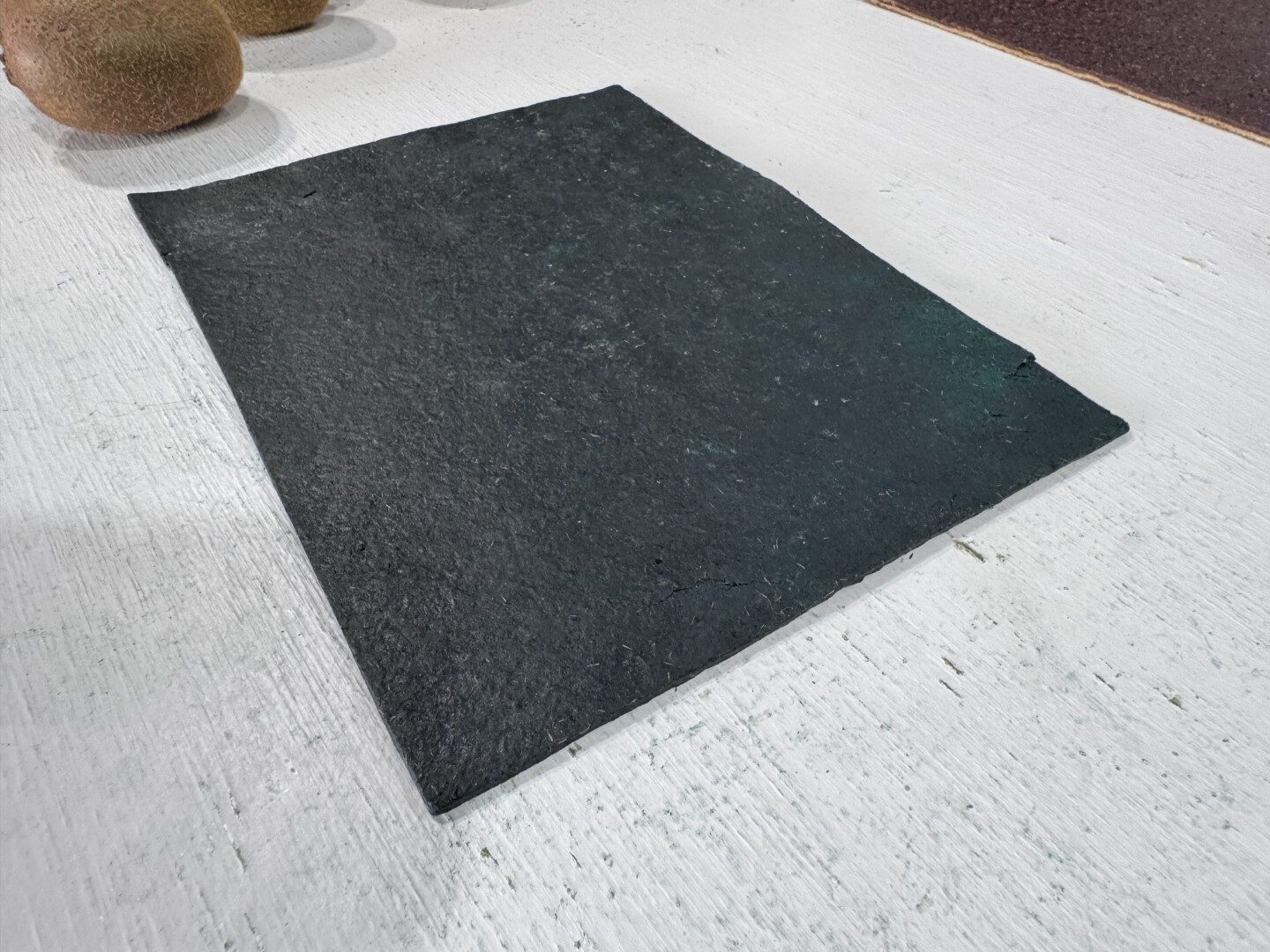
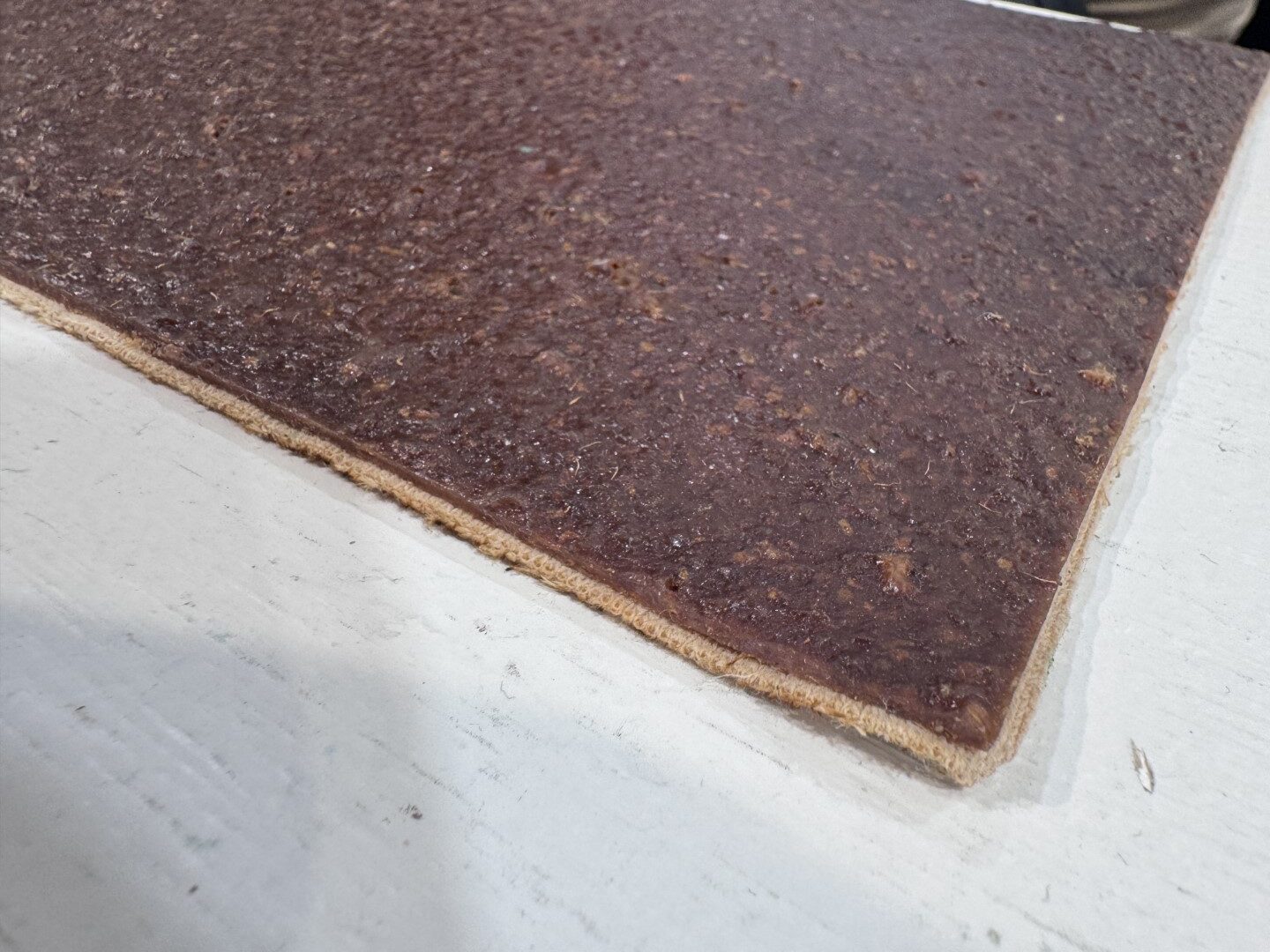
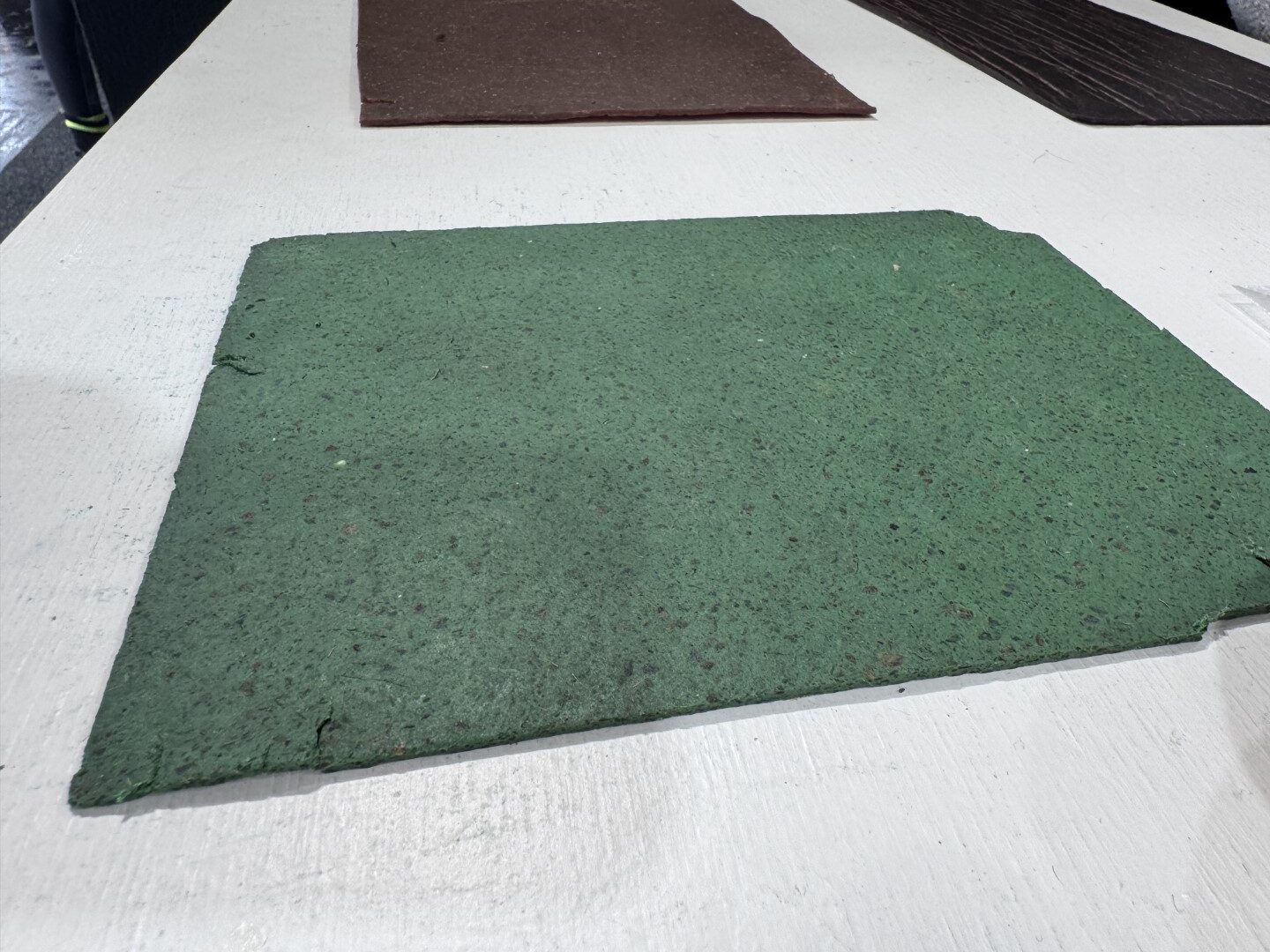
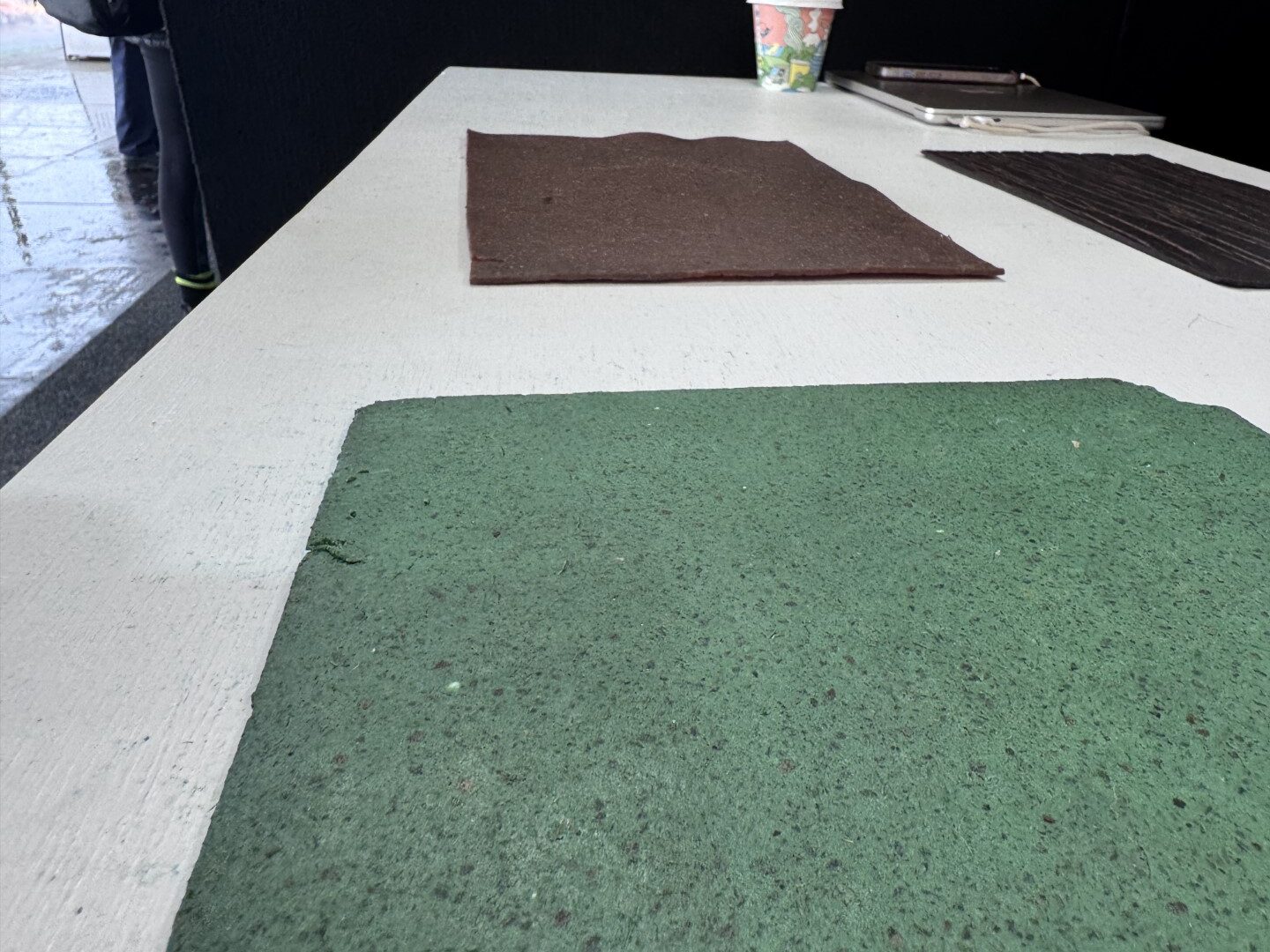
Well, traditionally it’s breaking pasta machines. We’ve been using those to roll out our samples. Now, yet again, listeners, you can’t see we’ve got some samples and some pre prototype stuff that Shelley and I have been working on over the last four or five years. They aren’t of the quality to go into mass production. So on the back of that, we’ve actually been talking with the likes of Scion. In fact, we’ve been doing more than talking to them. We’ve actually partnered with Scion. They’re a research and development facility in the Rotorua region.
Chris [00:03:36]:
So they’ve taken a lot of the conceptual ideas that Shelly and I have had. We’ve actually got both of us a bit of a chemical background. I run a chemical manufacturing company, Shelley’s previous business. She formulated a range of cosmetics which all in her kitchen and now are manufactured over in Milan. So, yeah, I know, we’re mad scientists, we really are. So anyway, with the Scion conversation, they’ve got some first samples. To us, these are very much pretty pre pre. This is their first attempt at it.
Chris [00:04:02]:
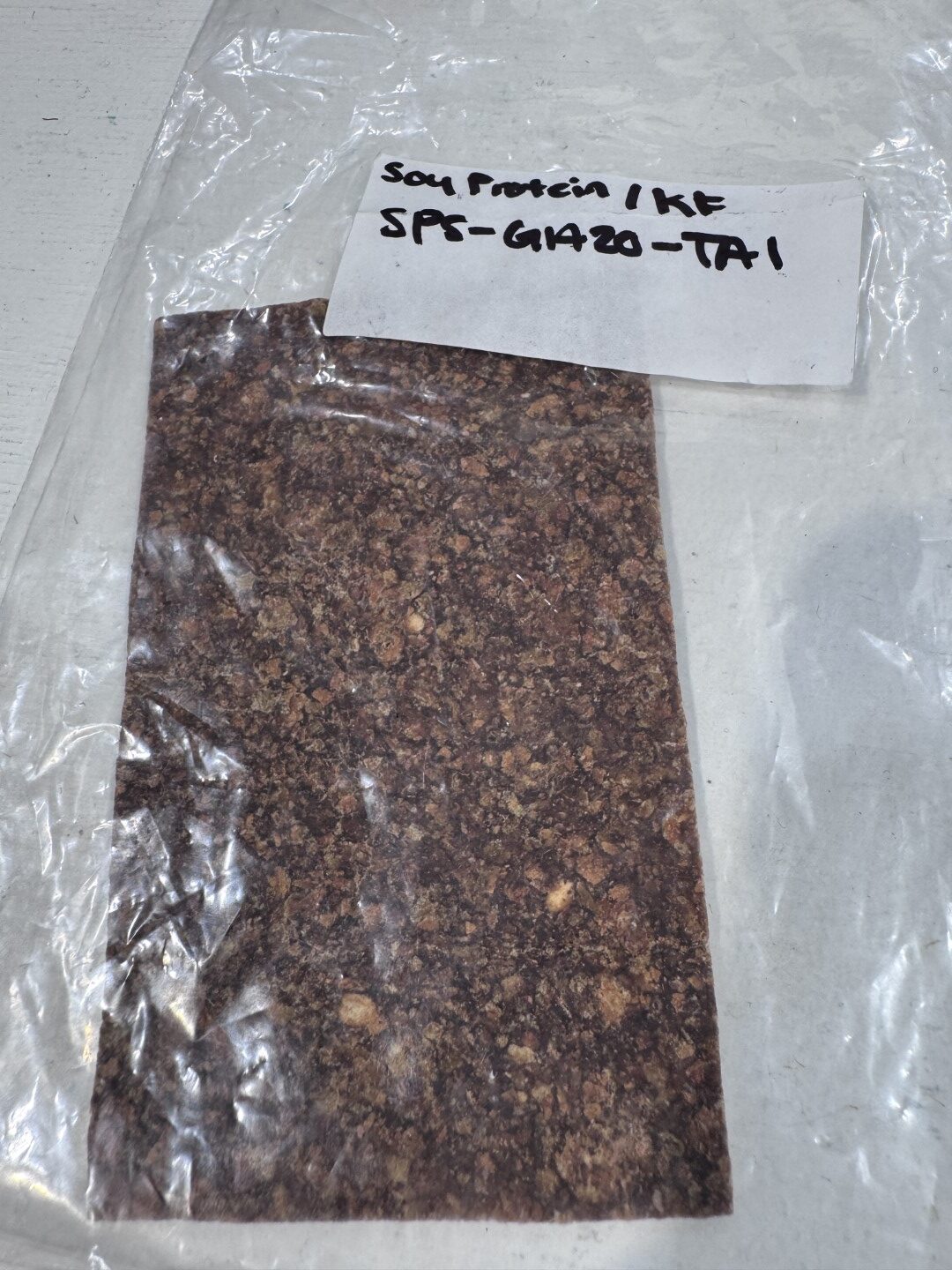
And this is a one in my hands, a soybean protein with the kiwi fruit. And they’ve also adjusted the process on how they’re going to be dealing with the biomad or kiwifruit as well.
Sam [00:04:11]:
That’s very cool. Will you have to be using like, existing machinery that’s out there or do you have to develop that as well?
Chris [00:04:21]:
Fortunately, I’ve done a little research around this. So with the process, it’s probably be best to talk about what we want to do going forward on a commercial basis and how it’s going to be processed. So with Scion, we’re going through a basic extrusion process with the kiwifruit. So the whole kiwifruit goes into a machine. 60% of the mass of a kiwifruit happens just to be the water content which is being removed along with some of the sugars and we’re left with like a, a bit of a pulp, like a wet slurry. From there we are drying it out and creating a powder. Now the reason we’re creating a powder out of the kiwifruit batter is so we can have consistency across large scale manufacturing. So any defects or any fluctuations in the quality are spread across a larger raw material sample from there.
Chris [00:05:08]:
We’ve also been working with them on a whole lot of plasticizers which are all bio based. We’ve also been dealing with natural rubbers, different epoxylized soybean oils, different pea proteins, different soybean proteins, whole raft of natural additives to give it that, you know, the tensile strength, the durability, the touch, the feel, you know, all those things you find in a normal leather product to give it that, you know, that like a leather pouch. So we’re expecting our first sample from them in November and it’s going to be very much more what you see in a traditional leather pelt.
Sam [00:05:48]:
That’s very cool. Yeah, we’re going to have some photos here of the initial product here.
Chris [00:05:54]:
Ugly samples. Give us that.
Sam [00:05:56]:
No, but it’s a great visual representation of what you’ve already done, where you’re going and what could be achieved with this.
Chris [00:06:03]:
Yeah, just I didn’t actually ask answer your question very well on the machinery componentry, I realized I glazed over that. So with the extrusion process there are a number of different central fugal and you know, corkscrew machinery that will do that with the drying process, number of dehumidifiers and kiln options out there, the grinding yet again very much off the shelf from China or us or anything like that. Now with the rollers and such, a lot of that comes from my thinking at least comes from the paper industry. So there’s a lot of those heated presses, there’s a whole lot of those big machines there that will actually more than suffice in what we want to do on a final production line.
Sam [00:06:41]:
That’s got to be good as well because you don’t want to reinvent the wheel when there’s machinery out there that can do pretty much the same thing but in a different industry.
Chris [00:06:48]:
There’s also a lot of distressed paper mills out there at the moment. So there’s the opportunity to repurpose some of the machinery that I’ve seen coming up for sale. Anyway.
Sam [00:06:56]:
Yes, very good. Hey, before we carry on, we’ve got this little random sack of questions. We haven’t done this before. This is first for us. Pick two, answer one. Here, grab another. Oh, you got two. Grab another one.
Sam [00:07:07]:
You get to pick which one you’d like.
Chris [00:07:10]:
Pretty happy with the first.
Sam [00:07:11]:
Oh, well, that’s right. Just read out. Read out the question and then give us your answer.
Chris [00:07:14]:
What’s a TV show you can re watch anytime? That has to be the Office, namely because I’ve watched it probably two dozen times. Very rewatchable.
Sam [00:07:24]:
Very rewatchable. Have it on the background. How do you feel about the Australian one coming up soon?
Chris [00:07:29]:
I saw half an episode. That’s where I’ll leave it.
Sam [00:07:32]:
Okay. I haven’t seen any of it, so I don’t know. I think I’m too scared to watch it.
Chris [00:07:36]:
I think the first season is actually completed. I only watched one episode and I wasn’t. Yeah, no, no, not my cup of tea.
Sam [00:07:42]:
It’s very tough with these reboots, eh? Doing things like that. So where can people find out more about Kiwi Leather innovations?
Chris [00:07:49]:
We’ve got a couple of media little excerpts coming out very shortly. You’ll find it as in seven Sharp in the coming months. Failing that, we’ve got a website which is www.kiwifruitleatherinnovations.com, which is a bit of a mouthful, bit of a long one to type out. We’ll come up with a shorter URL at some stage. We’re Also on socials, LinkedIn, Instagram and.
Sam [00:08:09]:
Facebook, all those good places. What’s the feedback been like at field days so far?
Chris [00:08:14]:
We were blown away yesterday. The. The response has been rather overwhelming. There’s a huge. Everyone’s incredibly supportive of the initiative and also the opportunities that sit with repurposing kiwifruit. We’ve spoken to a number of people in that supply chain, whether they be working for pack houses, they are the truck drivers that shift around by product kiwifruit or they’re the growers themselves. All are very excited with the potential of this opportunity.
Sam [00:08:40]:
And just to finish off, what’s the plan for the next 12 months?
Chris [00:08:43]:
Next 12 months are pivotal is when we see that first sample from and Scion that will really dictate on how we move forward going in the next 12 months. Once we have that sample, we’ll be testing how it stitches its robustness, its durability and we’re working out what levers we can, you know, play within the formulation to get the product we’re actually looking for. I would suggest quarter one, quarter two next year we will certainly have a pilot manufacturing facility likely in the Bay of Plenty region and probably the end of the year, let’s say some small scale production on of sheets of leather.
Sam [00:09:17]:
All really exciting. Thank you so much, Chris, for taking the time to talk to us. We’ll have this up on our website with the show notes and the images. Thank you so much.
Chris [00:09:26]:
Thank you. Cheers.
Where you can find us
Get Patreon Perks
Our Facebook Page
Visit us on Instagram
Chris’s Website
Sam’s Website