Summary
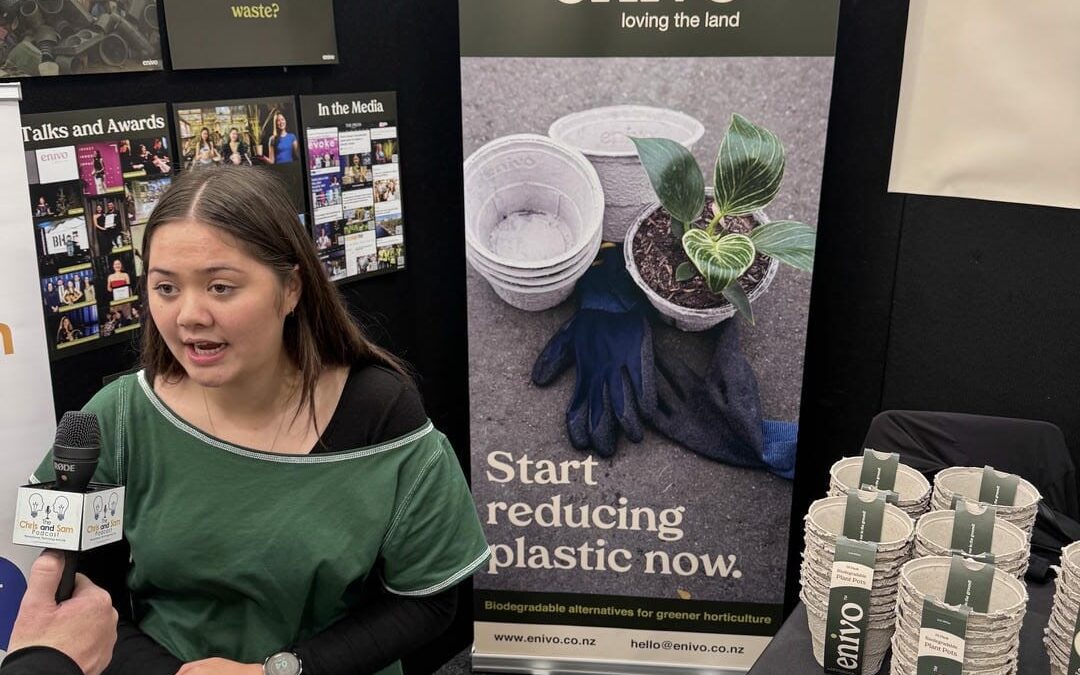
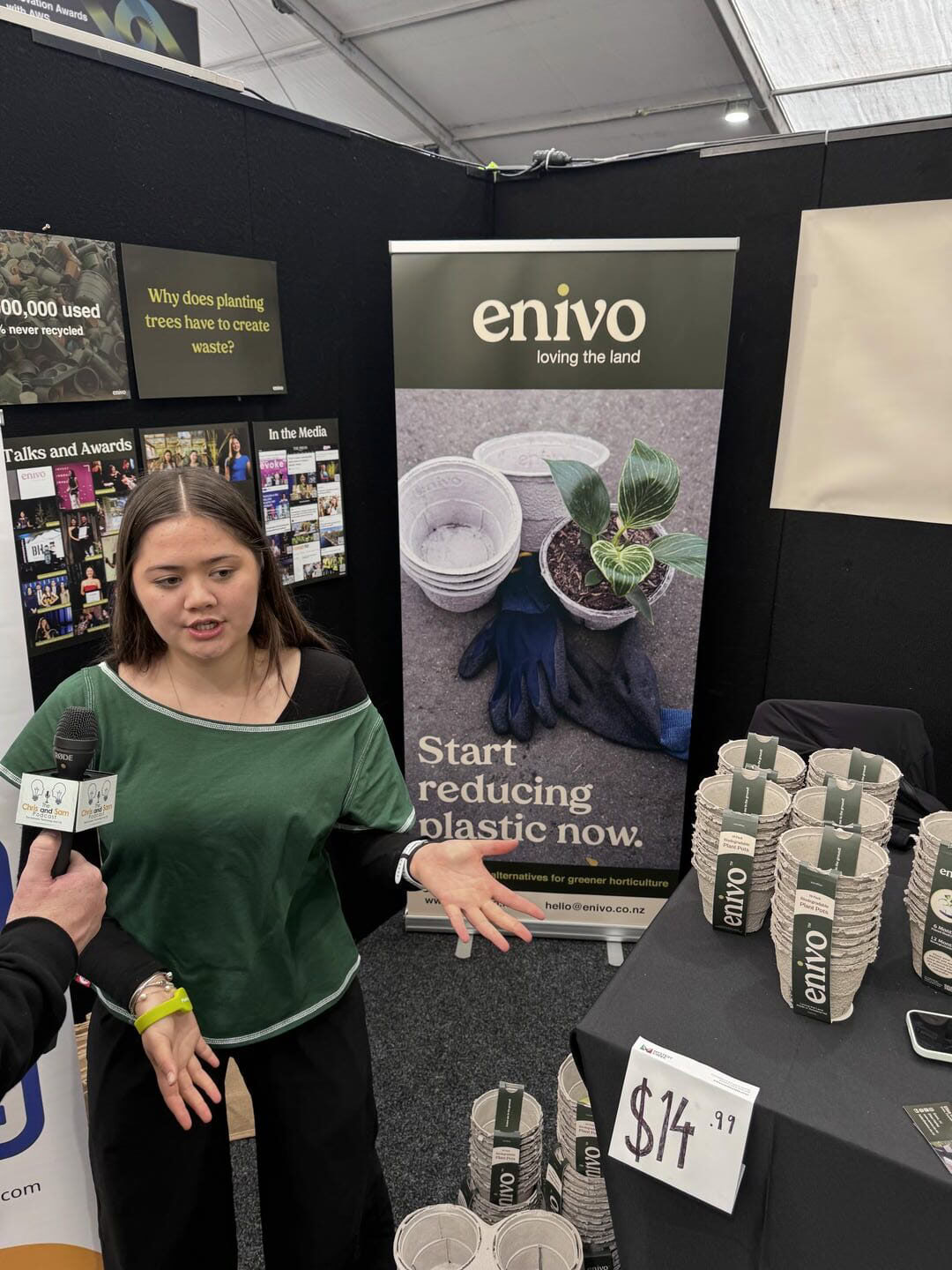
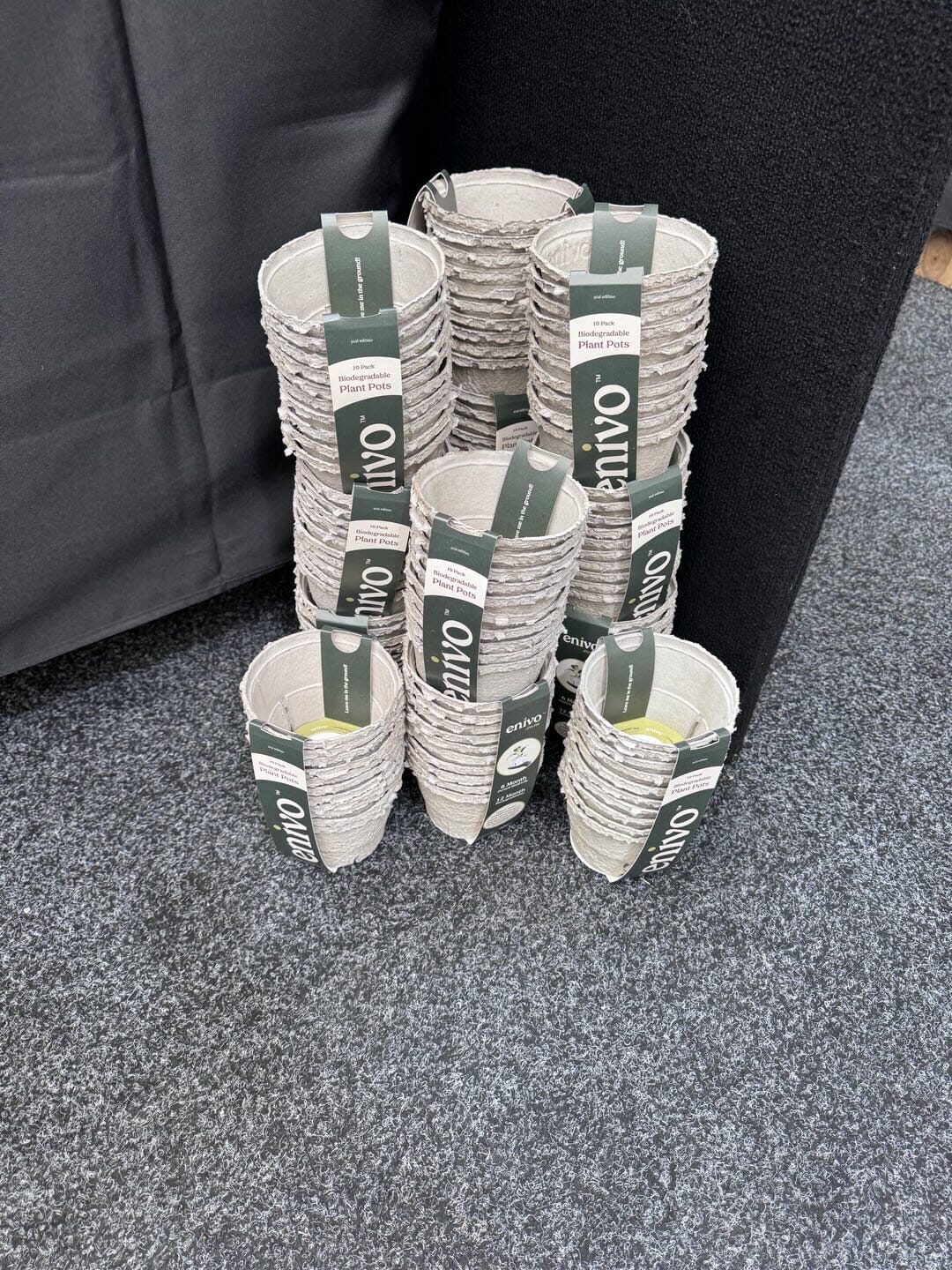
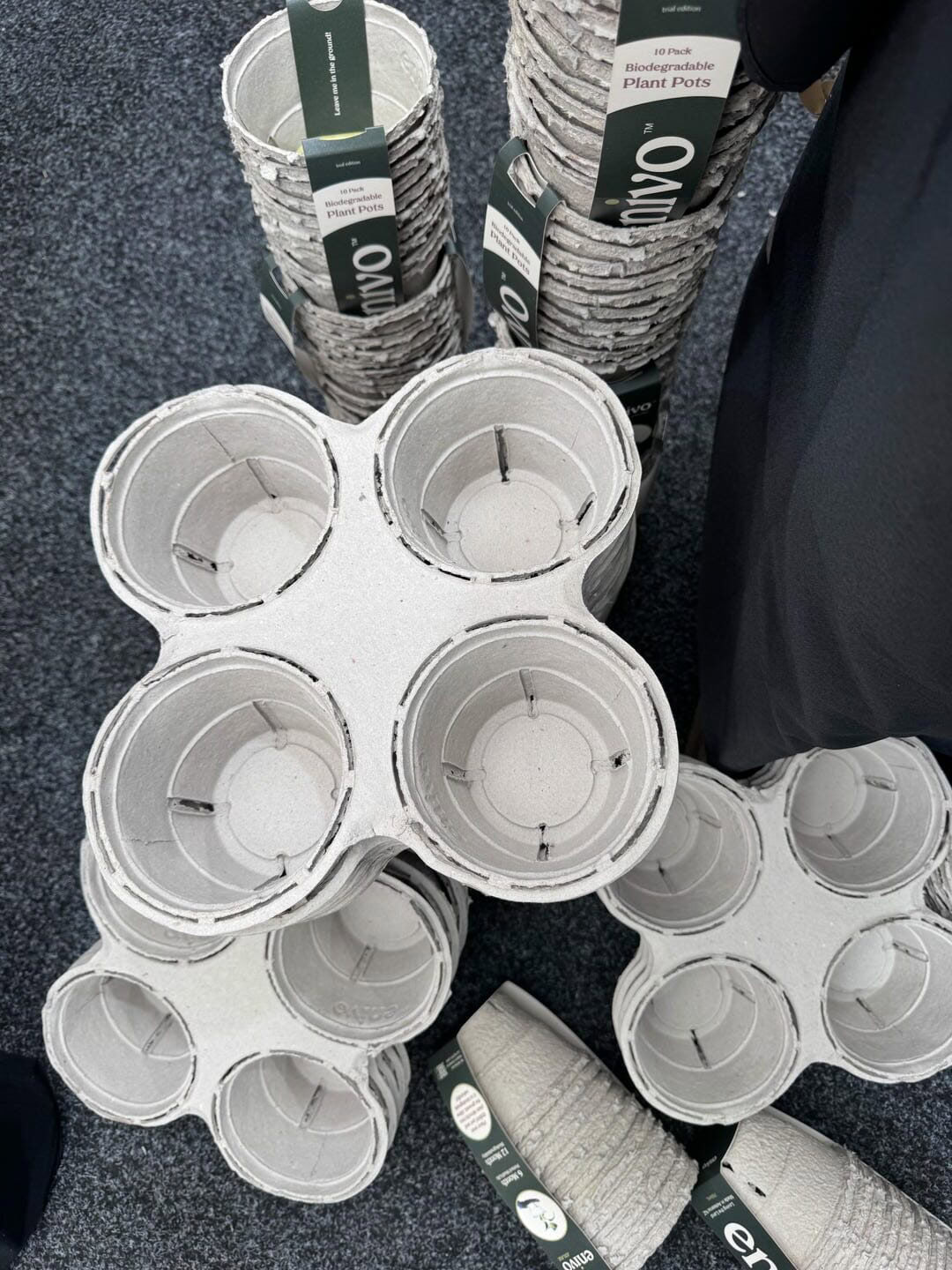
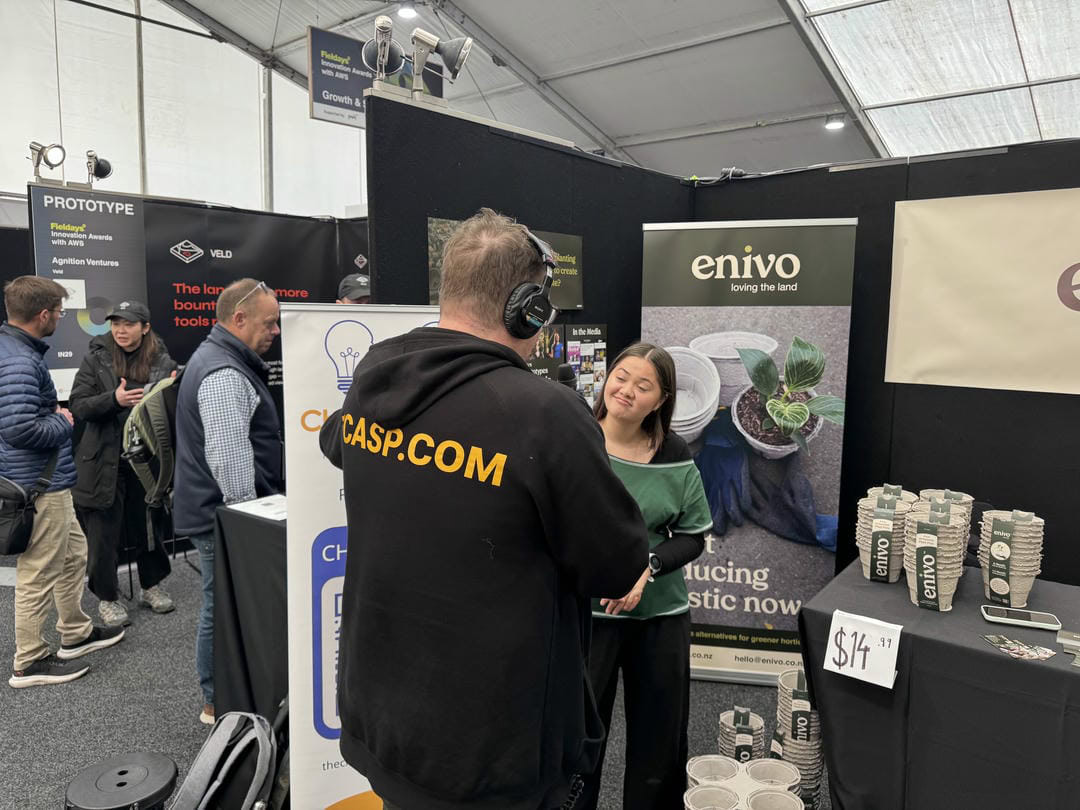
From our Fieldays 2026 coverage Sam talks to Elisa about her journey to make a biodegradable plant pot here in New Zealand.
Discover how a teenage fundraiser became a full-time eco-entrepreneur, why dirty pots are such an issue, and what it takes to create a locally manufactured solution. There are awards, random questions, and some TikTok fame thrown in.
All this and much more.
Links
Photos
Show Notes
This transcript was generated by an AI and is probably not 100% accurate. It pays to listen to the podcast, but if you have questions about any of the information found here, please reach out to us.
Sam [00:00:21]:
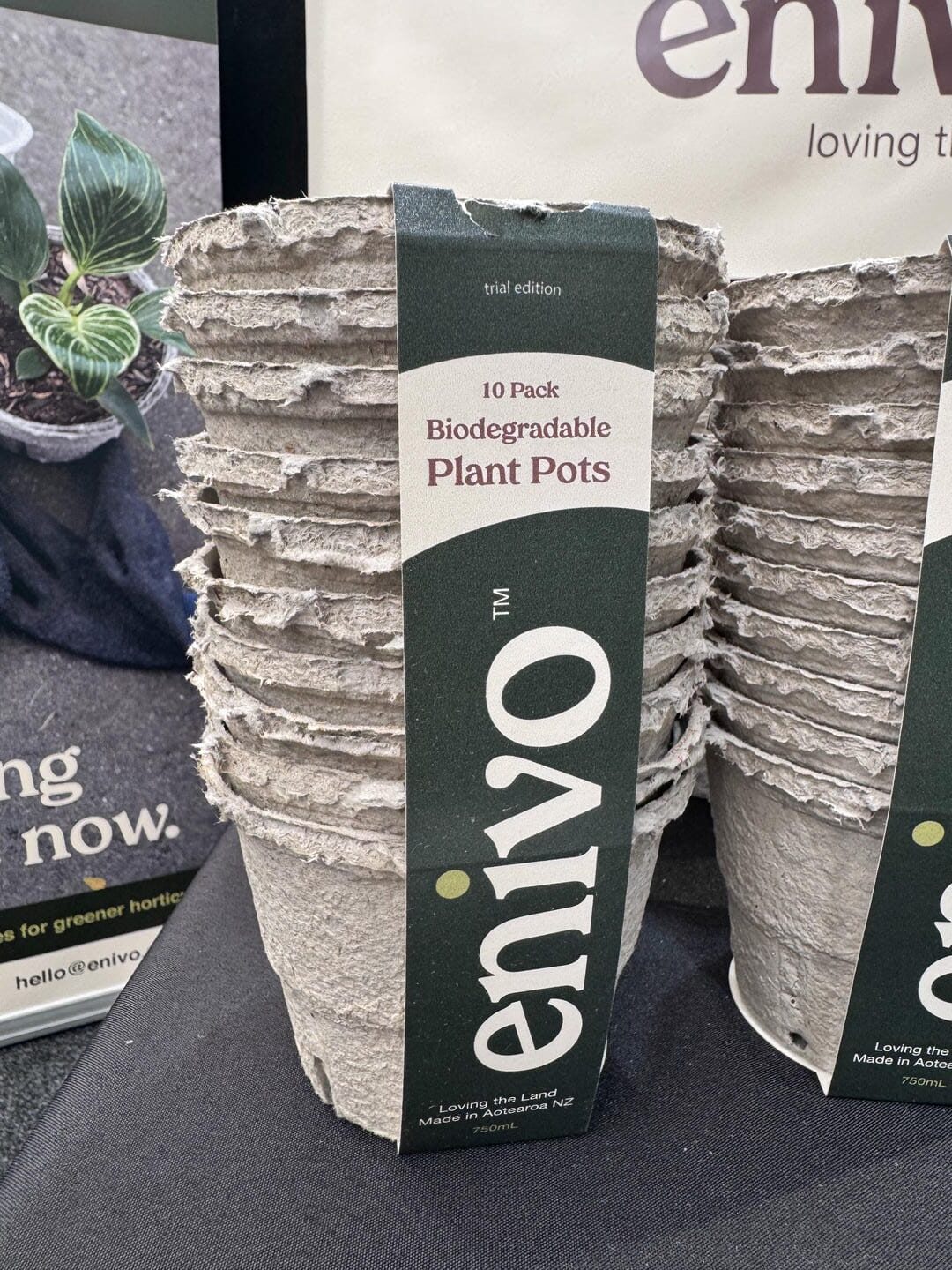
Hello, guys, we're back here with another Field Days interview for you. I'm here with Elisa at Enivo, loving the land. Now, from what I can gather, you've been on a journey. You've created biodegradable plant pots because there is a big problem in this country and I know firsthand, and I'll tell you that in a sec. But there's 350 million used pots and 95% of them are never recycled. How did this get started?
Elisa [00:00:48]:
So I actually started this business idea when I was 15 years old. I was selling native plants to fundraise for gymnastics competitions and found myself with hundreds of plastic pots before realising that the issue wasn't just hundreds or thousands, but hundreds of millions of plastic pots every year in New Zealand alone.
Sam [00:01:05]:
Yeah, it's crazy backstory for Elisa and some people that may not know. I grow giant pumpkins, or used to. Used to do them at scale as well for a pumpkin competition here in Hamilton and we'd get 200 seedlings ready to go. Now, we used a place, I won't mention where it was, but it was a big nursery and in the corner was this huge pile of plastic pots and they could not reuse them because they were dirty and they would not go back into the machine for filling. I could take those pots, do whatever I wanted with them, and as a random side hustle, I was selling them to people on Facebook Marketplace. I don't do that anymore for some reasons that I'm not going to get into. But the they did not know what to do with them.
Elisa [00:01:44]:
No. So nurseries at the moment, you've got a couple options once you've used a plant pot because obviously they're dirty and depending on where you're planted, if that's a farm, potentially, it's not just dirty with dirt, but dirty with diseases and that can be a huge, huge risk for our native species. So planters are mostly just taking those plant pots straight back to landfill. Or they can bring them to some nurseries, though they've got to be individually sterilized and bleached before being reused, or people are just digging a big hole and setting them on fire, which is not ideal.
Sam [00:02:15]:
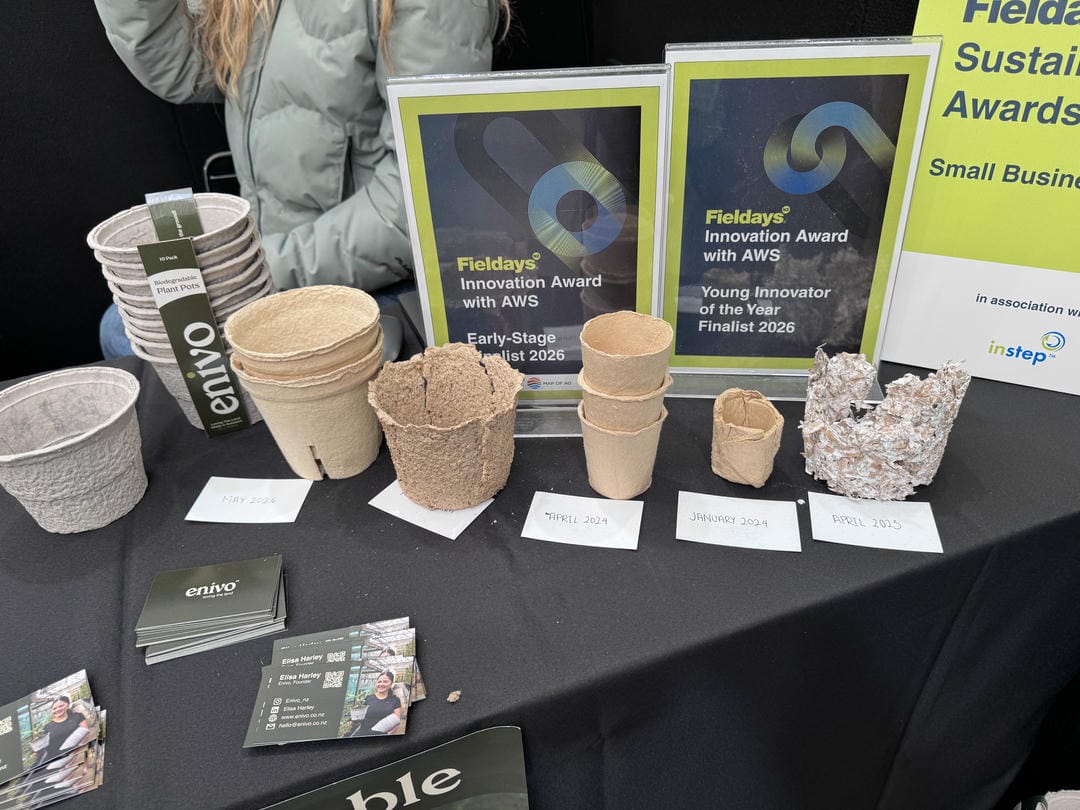
No, that's frowned upon. And do not do that on your wall here. You've got some really good information posters here. Three years in the works, four prototypes, 600 trials. What was the hardest part when you started out coming up with this product.
Elisa [00:02:33]:
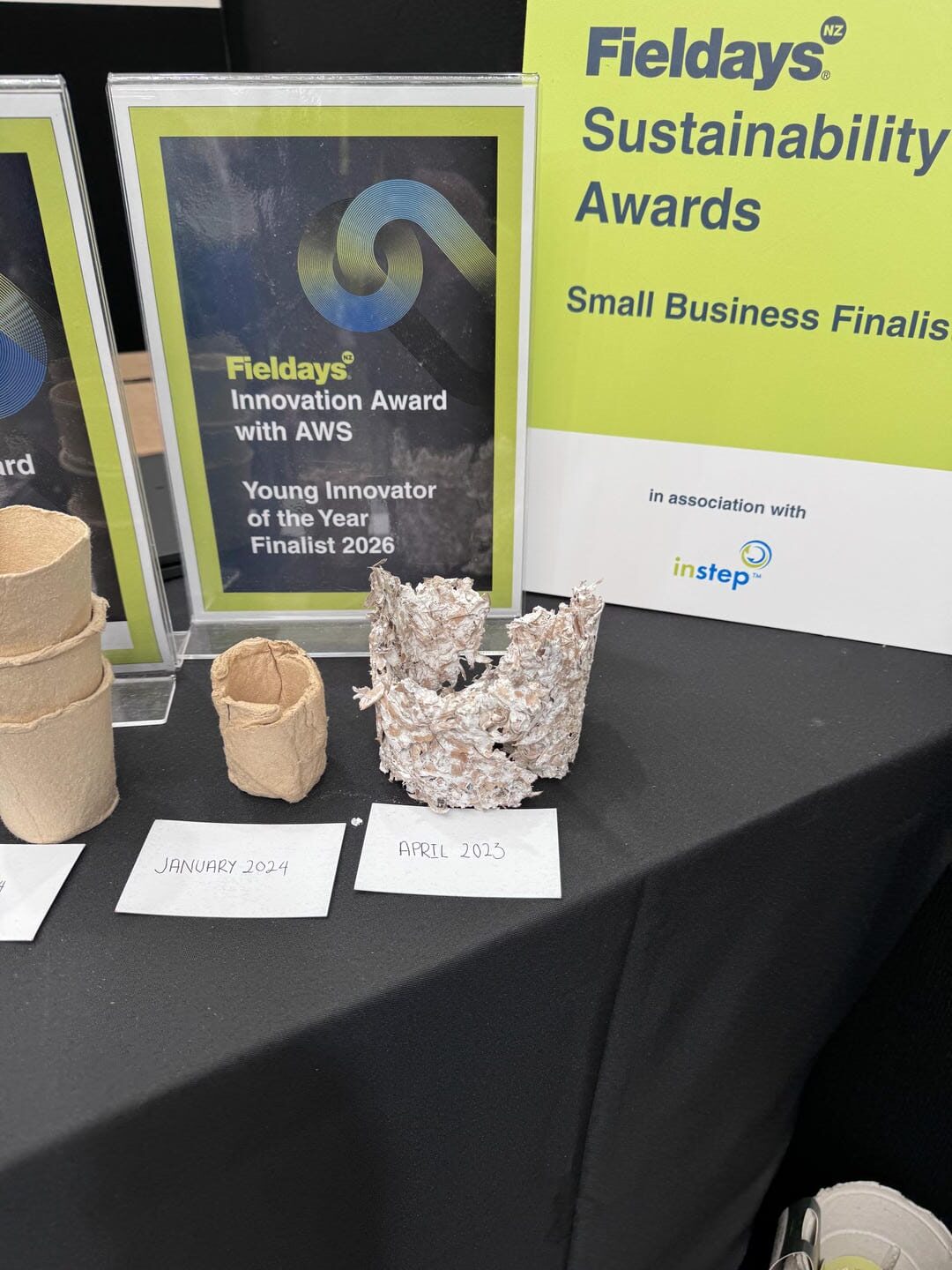
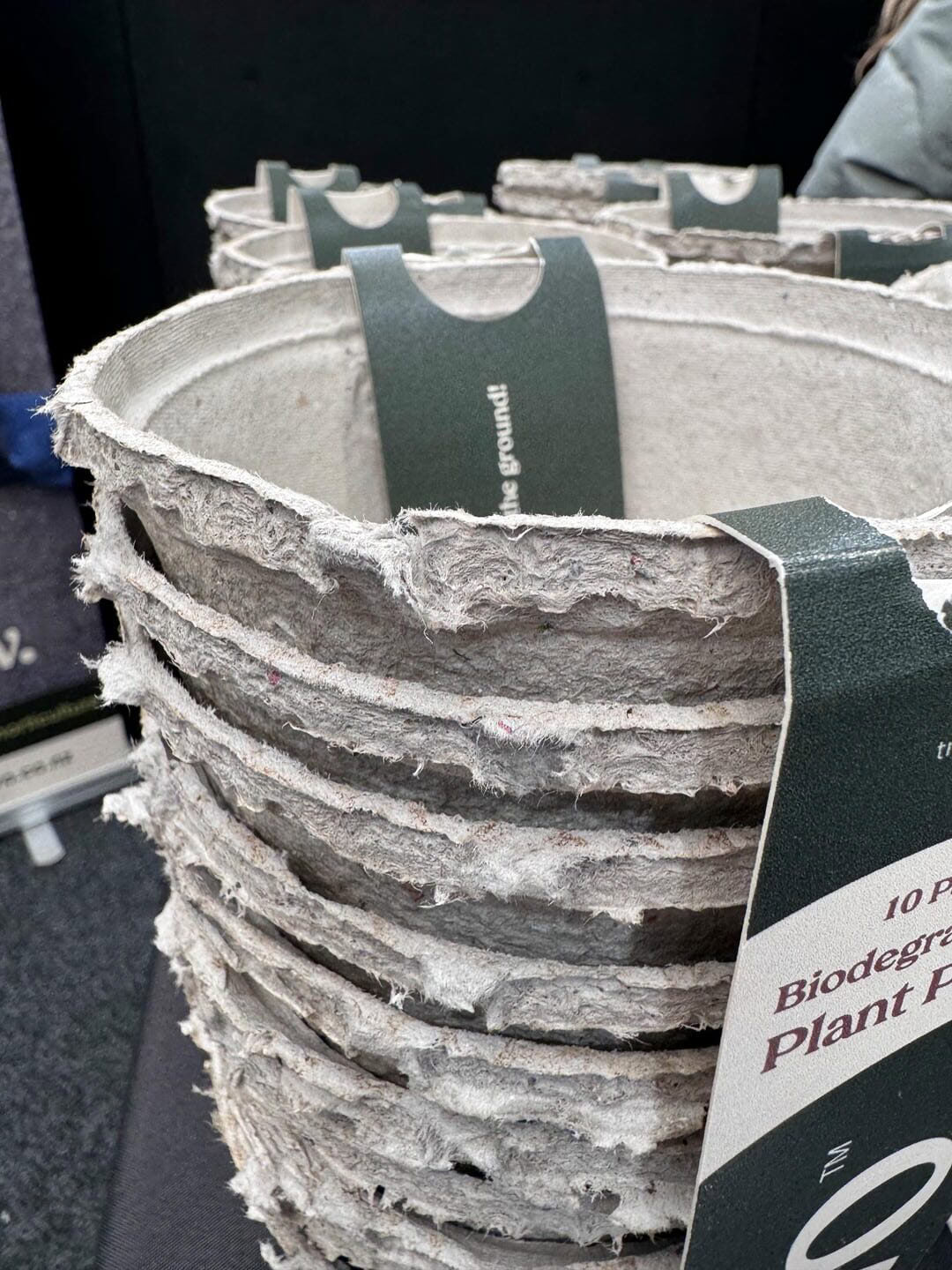
My goal from day one was manufacture in New Zealand, which I was told from day one was not possible. But as the stubborn 15, 16 year old I was, I was going to make it happen. So it's mostly been proving the concept. So using New Zealand innovation and infrastructure to custom make machines to try and make a pot and then test it with nurseries, then get feedback, then make a new design, a bigger pot, test it, bigger pot, test it until yeah, we had 600 trials and now as of Friday, we had our first manufacturing run in Auckland after spending six months making these molds and so it's real cool to have them finally be real.
Sam [00:03:09]:
That has to be such an exciting moment to get the product in your hands that you started so long ago dreaming about.
Elisa [00:03:17]:
It's been insane. And recently I spoke at a conference and there were some people who'd seen me at the very beginning of my journey. So I spoke at this conference in 2024. Business was just an idea. These people helped me out, made the pots real. And then I spoke again at that same conference and it was real cool. Them who'd supported me throughout that journey and then being able to compare the photos of 15 year old me versus 19 year old me holding a plant pot now.
Sam [00:03:42]:
What an amazing story. Are you doing this full time?
Elisa [00:03:45]:
I am. So I started uni last year for a year, but then realized I needed to do this full time. So now I'm full time in it.
Sam [00:03:52]:
The people are buying them here at Field Days, they love them. Like it's such a great idea. It's a no brainer. You plant the whole pot in the ground and not worry about it at all. Recycling, full circle movement, that sort of thing. I know you've won a bunch of awards during this process. Do you want to just rattle off what you've got?
Elisa [00:04:11]:
Yeah, it's been insane. Mostly the industry conferences I've been able to speak has been the most rewarding. So I even went and spoke in Abu Dhabi at a world conservation Congress with 8,000 sustainability leaders. More recently my friend and I were at Evoke Ag, speaking at a big agritech conference there. Various random different awards. Young Wellingtonian of the Year.
Sam [00:04:35]:
That's amazing.
Elisa [00:04:36]:
Some forestry awards, Young innovation awards, but honestly the like the big reward, which I know will sound cringy to say, but holding a plant pot, which I've been working on for three and a half years and seeing people pay their money for it is like the most
Sam [00:04:50]:
insane thing you have to celebrate those wins. You have to believe in yourself. And when people are buying them, like people are touching them right now next to us as we record this. They're about to drop some money on this. That's amazing. The real question I guess for me next is where can people buy these from?
Elisa [00:05:05]:
So we're looking at opening up our website next week for wholesale inquiries so you can buy these in the tens of thousands as well as pitching to retail stores and then maybe opening up E commerce for people to buy just a 10 pack. Otherwise, field days. This is our first time launching.
Sam [00:05:21]:
It's very exciting Enivo loving the land. We've got a tradition here at the Chris and Sam podcast when we do interviews. I'm going to ask you a random question from my random question generator. Let's go to one of them. You get to pick one of those, read it out to me and then give me the answer.
Elisa [00:05:40]:
Okay. Now this is complicated. So the question I'm looking at most likely choosing is if your life was a video game, what would the cheat codes do? And this is gonna sound really cringey again because I feel like I live my life of cheat codes because I have awesome mentors and this is my little piece of advice. Mentors is like seeing into the future. Like for me to. I've got very selective with who I allow to speak into my life and my business and give advice. But the people who I do trust, whatever they say, I'll kind of go with even if it doesn't make sense to me. Someone says, don't sell in Australia, it won't work.
Elisa [00:06:13]:
And I'm like, oh, but Australian nursery seem to be really excited. But because this person's been doing business for the past 40 years, I see them as like they've done this before. This is like seeing into the future. So that's my probably not very fun answer. But genuinely, it feels like a cheat code to have awesome mentors and advisors in my life.
Sam [00:06:31]:
That's a great piece of advice. I'm sure Chris is nodding to the side here with that in 12 months time. What's the dream?
Elisa [00:06:40]:
The dream is that we've sold 1.5 million pops.
Sam [00:06:44]:
Excellent. I think you're going to get there. I look forward to seeing where this goes. Thank you so much for talking to us. Now, where can people find out more?
Elisa [00:06:51]:
So head on to our website which is eivo.co.nz. That's E N I V O. Otherwise you can stalk me on social media, on LinkedIn, Elisa Harley. Always open to any opportunities, any conversations to try and make sure that planting trees doesn't create plastic waste.
Sam [00:07:10]:
That's amazing. I will say you are on TikTok as well, because my partner saw your video last night of you separating pots and told me I had to come here and make sure I found you to talk to you.
Elisa [00:07:19]:
That's crazy to see. The TikTok algorithm is hard to beat, but it's about. It's been really cool to educate other people my age on this issue because I didn't know plastic pots was an issue until I started growing trees just randomly to fundraise for my gymnastics competitions. But what I'm most passionate about is empowering young people that they can use entrepreneurship as a tool to actually change and save the world. And so that's what I'm committing my life to do. Use business, create products, make it easier for people to live life.
Sam [00:07:47]:
Awesome. I'm guessing in the future you're going to be the mentor.
Elisa [00:07:50]:
Hopefully. I love going back and helping out students. I did the Young Enterprise Scheme in my first two years of business, which is a nationwide competition for high school students to start real businesses. And I've been mentoring pretty regularly, coming back to see them speak at events because yeah, that program changed my life and there's nothing I can do to go help them. Enough.
Sam [00:08:11]:
Amazing story, amazing product. I wish you all the best. Thank you so much for talking to us.
Elisa [00:08:15]:
Thanks so much for having me.
Where you can find us
Get Patreon Perks
Our Facebook Page
Visit us on Instagram
Chris’s Website
Sam’s Website