Summary
From Fieldays 2026 Sam chats with Marcus from Gyroplant about their innovative reusable root zone architecture for growing plants without single-use substrates.\
There’s talk of growing food for space missions, geothermal greenhouses in New Zealand, and the challenges of changing farming mindsets. Vertical farms, space agency research, and pilot projects all pop up in the conversation.
Links
Show Notes
This transcript was generated by an AI and may not be 100% accurate. It pays to listen to the podcast, but if you have questions about any of the information found here, please reach out to us.
Sam [00:00:21]:
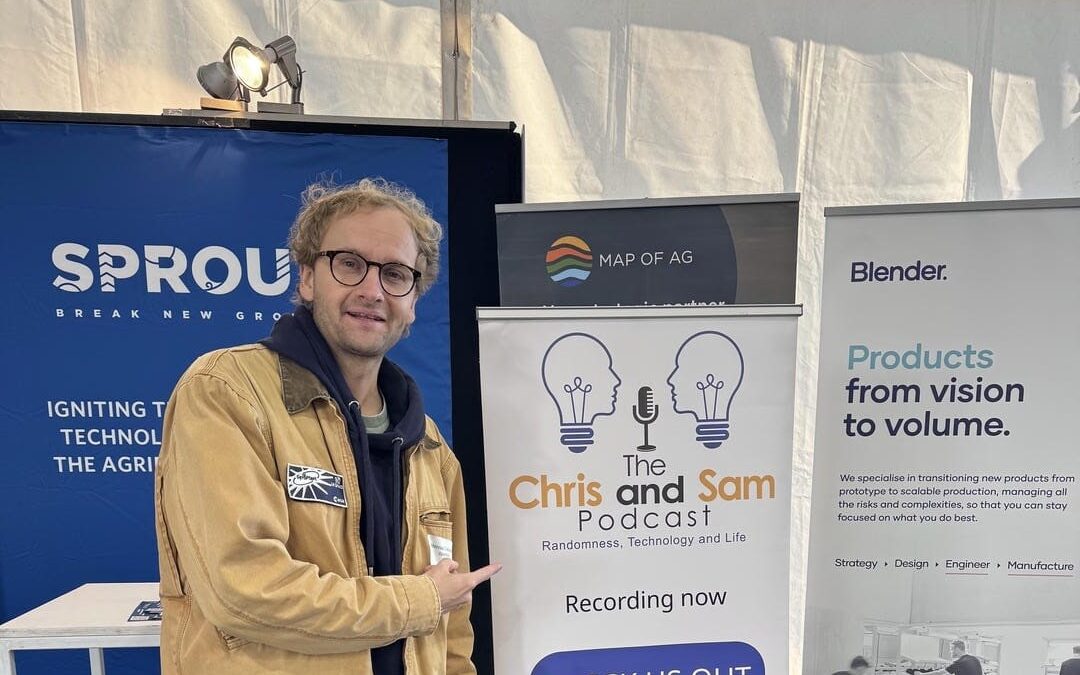
Hello, everyone. I am at Innovation Tent at field days 2026. I am catching up with another one of the UK delegates that sprout has brought to New Zealand. I'm with Marcus from Gyroplant. It sounds like an amazing company and I'm keen to find out more.
Marcus [00:00:36]:
Oh, thanks, Sam. Great to be on the podcast.
Sam [00:00:38]:
So I understand from the very brief information that I was given, I actually was given a lot of information, but I briefly looked at it as the actual thing that's happened. A new plant growing medium. Is that correct term?
Marcus [00:00:51]:
Oh yeah. So interesting you picked up on that. Sometimes we say a new plant grow medium, sometimes we say we eliminate the medium in the first place. So right now in hydroponics, where you would find in greenhouses, vertical farms, and a lot of hobbyist growers at home as well, hydroponics utilizes a media or substrate to grow the plant in instead of soil. However, the problem with the single use substrates is that they're single use. So we have to throw them away at the end of every harvest. They get mouldy, you get diseases growing, they fill up your bins, and eventually that just costs too much money to make it worthwhile to do the hydroponics in the first place. So what we do is we've designed reusable root zone architecture, which grows plants in a better way, in a healthier way with a far less environmental footprint.
Marcus [00:01:36]:
So you can grow the better produce without the need for the substrate in the first place. So they look like spiders. If you go on our website, you can see the crazy designs that we currently have. But we help grow things like lettuce, legumes, strawberries, lots of leafy greens. We've even helped wasabi, radish and mainly strawberries.
Sam [00:01:53]:
Now, have you thought about a giant pumpkin?
Marcus [00:01:57]:
Sometimes it's funny you say that, Sam, because sometimes we have jokes on the website where we show a picture of a huge pineapple growing on top of a gyrocup. But we will get there. But it's interesting you mentioned larger crops because a lot of our work now is in propagating those early sage trees and plants that then go on to provide those fruiting plants which are much larger. So even if you're not growing a plant from seed to harvest in the cup, we can help grow those early stage tree saplings, fruiting crops at early stage, before they're put outside or in the greenhouse.
Sam [00:02:30]:
Yeah, that's a really cool idea. Now, how did this start? And tell me your story.
Marcus [00:02:36]:
Oh, okay, here we go. So you have to go back to COVID times for this one. So I was actually furloughed, I don't know what it was called over here. But that's when you. During COVID the government still paid for you to have your job, even though you didn't have to work. So I had to find something to do.
Sam [00:02:50]:
What were you doing?
Marcus [00:02:52]:
So I was a research and development engineer for a greenhouse company, actually, and I had an interest in hydroponics. I had a background in design engineering. And I feel like if you're an engineer and you like hydro, if you like. If you're an engineer and you like food, you end up in hydroponics as there's lots of mechanical elements to it. So I designed in my shed a rotational hydroponic system which grew leafy greens. And then one part of that system, because we had to hold a plant upside down, was actually the early stage product that we have today called a gyrocup. So it was a 3D printed part we had. When we got some feedback for the system that we designed, lots of the growers from the greenhouse companies and the vertical farms saw just the cup holding our plant with no media or no substrate.
Marcus [00:03:33]:
And they said, oh, we all hate media, we hate substrate in the indoor farming sector, which I had no idea about. Then I started learning about all the diseases that are coming in substrates from peat and coir and all the other things that come across. And so we just focused completely as a company just on that root zone architecture. And what we see today and what we sell today is actually looks a little bit similar to the original cup that we had in the shed back in the COVID times. And then it sort of grew from there. Really.
Sam [00:04:00]:
Every good story starts like that, I think, in a shed and then grows from COVID Such an amazing idea. Now, when you talk to people, is it one of those ones where people go, why has nobody done this before?
Marcus [00:04:13]:
Yeah. So when we introduce it to growers and botanists and agronomists, I think there was such a. There was a question of, oh, we want the next best substrate, we want the next best growing media. But there wasn't really the thought there of, oh, do we need it in the first place? So a bit like if we go back to. Back to the late 1800s where there was cars coming in after the horses and was it 4? That said, if you ask people what they would want with the horse and cart, they would say they want faster horses. But shifting the paradigm to a new different technology in the first place is harder to achieve. And what helped was that we weren't in the sector. I'm not a farmer, I'm not a grower, I'm not in agriculture.
Marcus [00:04:54]:
So my naivety actually played a really big impact, I think because you're going in there with very wild ideas which people haven't necessarily thought about before.
Sam [00:05:03]:
Yeah, that's a good idea. If you're coming in completely cold to a new industry, I think. Yeah, like you said, you don't know what you don't know. Was there a lot of pushback or is there still pushback from sort of people that are die hard growers using traditional methods?
Marcus [00:05:18]:
So it depends in the sector. So because we work a lot within high tech indoor farms and greenhouses, there's a massive culture there of trying new things and they want to be innovative. So that's really welcome there. The technology. The main barriers we've had are the new growing protocols that you need to grow within our technology. So new technologies always come with some sort of challenge. And our challenge is growing in a slightly different way, as you would compared to the substrates that are out there. But what's really important is when we work with those growers, we help them on their journey to grow their crops and then eventually after maybe three to four iterations, they realize the power of growing in a slightly different way.
Marcus [00:05:58]:
In substrate free environments. It is slightly harder to convert some greenhouses. Lots of the issues can be, or challenges, I should say, are with automation. So if you have a farmer in a greenhouse using a million, there's a million plant positions. If you use our technology, you'd have to transplant those plants in different environments and different to different places. That being said, we have proven the automation. We're working with some of the largest automation providers in the world who are now trialling our technology within these large scale farms. So that will just come with time.
Marcus [00:06:32]:
This year we will be setting up a greenhouse, hopefully so that will be a pilot site where people can come and see our technology in action in a greenhouse to get the spur on the movement. But we are growing, we're scaling rapidly within the small farms. Strawberries. We've set up lots of different novel crops as well. Pharmaceutical crops, nutraceutical crops, they're the easy wins. But our goal is to get that big greenhouse using them eventually.
Sam [00:07:00]:
Very cool. It's exciting to hear about the growth and the People taking this on. I don't know if you've been told or have talked about it, but we did have a giant vertical farm here in the Waikato at the research center. I believe it went bust for some reason. I'm wondering if they needed your product.
Marcus [00:07:17]:
Yes, exactly. That's the key. Substrate free environments. You will succeed. No, the, the vertical farming industry has had lots of setbacks recently for us. We see the success stories within the novel crops. So if I mentioned to you, what would you normally see growing a vertical farm? You probably imagine something like a lettuce or a leafy green. Yeah, we want to change that image.
Marcus [00:07:40]:
Vertical farming has the power to grow pretty much anything, including roots, not just leafy greens, which are higher value than and higher in nutritional content than lettuce and leafy greens. So there's no doubt that when we look through our projects that we have globally, the ones that are doing well commercially are those high value crops not growing leafy greens. Leafy greens are very suited to a greenhouse environment. We don't, we shouldn't really change that. So vertical farming is in its infancy still a little bit. Everyone's so arguing which part of the hype curve is it at? Is it growing, is it declining, is it plateauing? But for us, we see it growing very rapidly.
Sam [00:08:21]:
Very cool. How's it been in New Zealand so far? Traveling around, talking to different people?
Marcus [00:08:26]:
Oh, it's been great. So we're here with Sprout and Innovate uk. We're here to understand the market and understand the growers needs. So from what I've learned so far, and I've only been here a few days, is there's a massive glasshouse sector which is maybe small in comparison to the outdoor agriculture, but there will be a renewal and a refresh of the glasshouse sector in the coming years. Potentially even powered by things like geothermal energy, which you have lots of resources for in this country. So there will be these very cool closed loop growing environments boosting the horticultural sector over here. So we want to be on that journey with the growers in New Zealand. You have this natural, maybe innate sense of wanting to grow without using things outside of New Zealand.
Marcus [00:09:13]:
So when we set up these vertical farms or these greenhouses, we don't want to be importing the substrate that's currently being used. So hopefully once that industry is growing, we can help support those and get those farms profitable as well and eliminate those problems of waste.
Sam [00:09:31]:
All very good ideas and it makes sense. Obviously you want to get the traditional growers to think about this new way of growing. And here in New Zealand we've got some, I think, I can't remember where it is now. There's a giant, one of the largest tomato growers in New Zealand has geothermal, like they're right next to a geothermal plant, I think something like that to keep it all warm. So I'm, I'm sure that they'd be keen on something like this. Now I do have to ask about the space side of things. European Space Agency, I believe. I don't know if you're.
Sam [00:10:03]:
What's the story behind all that?
Marcus [00:10:05]:
Oh, space. Everyone loves space, right?
Sam [00:10:07]:
We all want to grow potatoes on Mars, like Matt Damon.
Marcus [00:10:10]:
Well, come back in a few years. We actually just got some results through from the United States Space Force growing early stage potatoes actually in Colorado. So that's, that's now public. We are working with the United States Space Force. We've got funding from the European Space Agency in the UK and they fund a lot of our work within the plant growing labs across the world to do cool research on how to grow a plant effectively in space. So if you imagine all the problems we've got in greenhouses and vertical farms with substrate, you can't be shipping substrate up to the ISS or you can't be shipping substrate up to the moon base, which we'll be building in the next 10 years. So you have to grow substrate free. So that's a clear assumption that the space botanists and the growers and the research scientists out there and they're utilizing our technology now.
Marcus [00:10:57]:
So there are space agencies and there are based research groups growing our growing plants in our technology. Last year we had our first parabolic flights in America. So we took our cups up into a near zero G environment and you can see that online and you can see the roots growing through the cup and the plants moving around as our first validation for the next phase of entering space. So yeah, watch this space and we'll see how it goes.
Sam [00:11:22]:
How exciting is that? Yeah, that's amazing.
Marcus [00:11:27]:
When I first heard about growing plants in space, I was like, oh, what's the point in that? We need to grow plants on Earth, as I think a lot of people have that view. What we realized there's such a high value of carrying out R and D in a space environment and the stuff you learn, the designs you come up with, can then be filtered down to our terrestrial applications. So to give an example, the parabolic flights that we did last year, the design work from that went straight into our latest project product that's now being used for herbs in applications on Earth. So there's a real innovative R D capacity there which is really valuable, not just setting up the farms in space. It's more than that.
Sam [00:12:04]:
Very cool getting all that valuable feedback which you probably wouldn't have known otherwise unless you went on the vomit comet or whatever they like to call it. Hey, what has been the biggest challenges for you and your company?
Marcus [00:12:16]:
Biggest challenges. So we are a startup, even though we're growing, we agriculture we have to wait for plants to grow. So testing times can be long. So if you're testing a leafy green, it may test three or four in every half year period. But if you're testing something like a strawberry takes longer. And if you want to test a tree sapling in your technology that takes maybe a year to two years and some crops even longer. So there's a lot of patience that has to be required and with that patience you need money then to survive as a business and carry out your other activities. We have been fortunate to be supported by the UK government.
Marcus [00:12:53]:
So we combine our income with the UK's government innovate, UK's research council, we're also funded by the BBSRC which is the Biological Research Council in the uk. So they're really supportive in what we're doing. So the finances is one as every startup is in the same boat getting people to trust in the technology and believe it. So because sometimes we say oh, we eliminate the need for substrate, it sounds a bit too good to be true. A lot of the time people don't believe it. So it's only seeing is believing. So when we the more small growers that are using our technology now, they can then through word of mouth and build that ecosystem of trust to get into that substrate free world. So and that just takes time.
Marcus [00:13:32]:
So that's why we're here. We need to build connections, build relationships and they lead to those proper closing systems that that we're here to hit it, here to create.
Sam [00:13:41]:
So true. Where do you want to see yourself in 12 months time?
Marcus [00:13:45]:
12 months time. A pilot in New Zealand, a geothermal greenhouse growing Asian greens or ginger indoors.
Sam [00:13:56]:
Sounds very achievable. If you're listening to this podcast episode, get in on it early stage here in New Zealand. I'm sure it would be great for you. We've got a tradition here at the Chris of Sam podcast. I'm going to show you two random questions and you get to pick one of them. Read it out to me. And let me know which one you want to answer.
Marcus [00:14:18]:
If you had to give a 30 minute presentation with zero preparation, what topic are you choosing? I would choose birds. I'm beginning to be a bird enthusiast. I'm not sure what spurred that on, but I would like to give a presentation now. From what I've already known and I think there's something about when I've been visiting farm shows like this, you visit more farmers outdoors. I grew up in the city so there were lots of birds. Great. There's such a diversity of birds around New Zealand, around other places I visit. So yeah, I'd love to do that.
Marcus [00:14:51]:
Birds.
Sam [00:14:52]:
Awesome. Love the answer. Now, how can people find out more about Gyroplan?
Marcus [00:14:58]:
So Visit our website www.gyroplant.com or you can visit our LinkedIn page, Gyroplant, where you can see all of our case studies. So that's our main platform to keep everybody up to date, but we're also available on Innovate UK and Sprout as well.
Sam [00:15:13]:
Awesome. Thank you so much, Marcus for taking the time to talk to us today. I hope the rest of your trip in New Zealand goes amazingly well.
Marcus [00:15:20]:
Thanks, Sam. Really enjoyed that. Looking forward to hearing it.
Sam [00:15:22]:
Awesome.
Where you can find us
Get Patreon Perks
Our Facebook Page
Visit us on Instagram
Chris’s Website
Sam’s Website