Summary
From Fieldays 2026 Sam chats with Jacob from the UK delegation about HiFe Plants and their high iron, high zinc crops that could change how we feed people and animals.
There’s talk of long nights in the lab, GM vs natural plant breeding, the shocking realities of zinc deficiency in cows, and a missed pitch to Fonterra.
Red kiwifruit gets a mention, and there’s some debate about who actually gets to eat them.
Links
Show Notes
This transcript was generated by an AI and may not be 100% accurate. It pays to listen to the podcast, but if you have questions about any of the information found here, please reach out to us.
Sam [00:00:21]:
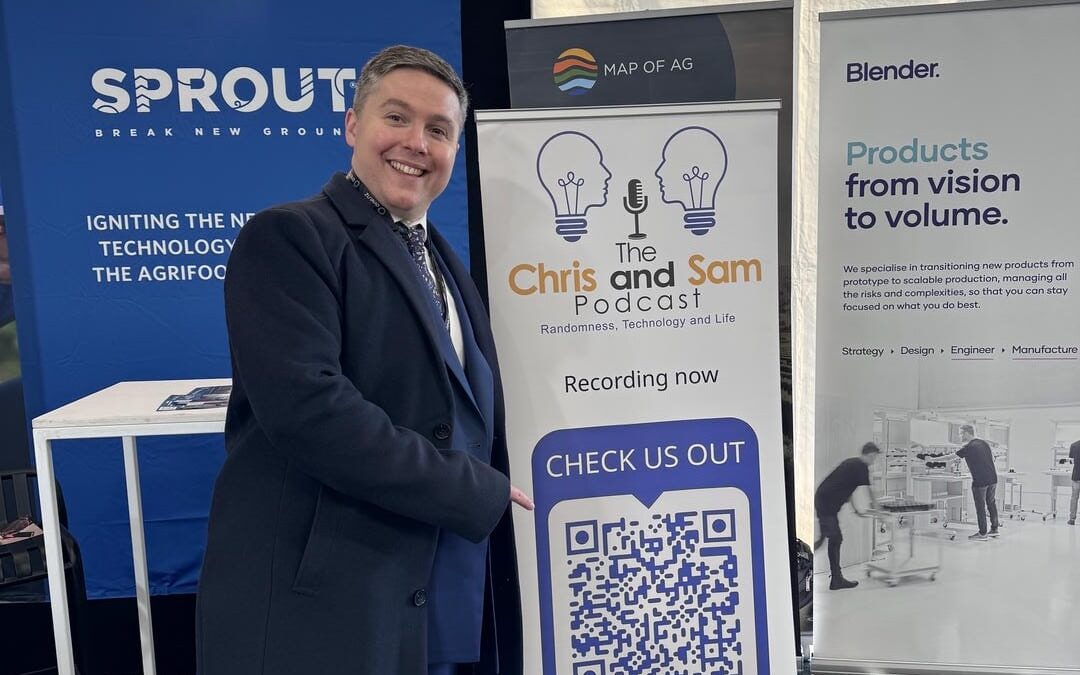
Hello and welcome to another Field Days 2026 interview. Here at the innovation stand, I'm in the Sprout corner. They're breaking new ground, igniting the next wave of technology startups in the agri food value chain is what their wall says. I'm here with Jacob, he's all the way here from the UK with the delegation. How's New Zealand been so far?
Jacob [00:00:41]:
Well, thank you very much for inviting me to talk, Sam. Yeah, I'm here with Innovate UK and in partnership with Sprout, we're exploring the New Zealand market, speaking to farmers, breeders and ingredient distributors just to explore the value for our high iron plant technology.
Sam [00:00:55]:
That would be HiFe Plants. Tell me, how did you get to where you are today?
Jacob [00:01:00]:
Well, so my background is as a protein biochemist. I started by looking at the mechanism by which different iron proteins work in just test tubes. I did a lot of work on iron storage proteins early on, particularly ferritin. My last job was looking at the ion sensing mechanism in plants at the biochemical level. So looking at how these proteins that are key for regulating iron levels inside the plants, you know, how they sense iron, how they interact with oxygen, etc. And then we were able to identify how you could actually tweak that system genetically to increase the iron content of plants such that they're a much more nutritious source for human or animal consumption.
Sam [00:01:35]:
Was that a long journey to go from the lab to the plant?
Jacob [00:01:39]:
It was a lot of long and stressful nights at times, sometimes getting those proteins to express. But I have to say that since we moved into the commercial side, it's been a lot of fun. It's fantastic to really rewarding to have three years of your work looking at the iron sensing mechanism in plants get to the stage, come to fruition, where when you talk to people and say, we've got something that could meaningfully improve, you know, the quality of life, if you're an iron supplement consumer in terms of getting rid of those negative side effects that come from traditional iron tablets or offering a higher value ingredient if you're, if you sell, you know, food or grow crops or potentially, and this is something that I've learned while I've been out in New Zealand, our plants also accumulate additional zinc. So if you're growing cows for beef or dairy, zinc deficiency is a huge problem. I learned about a disease called facial Eczema, which causes cows to keel over and suffer an excruciating death. And it may be that our high iron and zinc plants could be used for animal forage to address that disease without having to shove a massive lump of zinc down their throat.
Sam [00:02:39]:
What a great idea. And like a no brainer I think moving forward when it comes to the plants, do you specifically try every type of plant out there or are you specifically targeting ones or are some better than others to increase the iron content?
Jacob [00:02:55]:
It's almost certainly going to be the case that the technology will work better in some plants than others. So given the long timelines for, for developing new high iron plant varieties, we're starting in the crops that we discover the technology in. So that's currently pea and Lucerne. Okay, but so, and obviously you can see that those are both legumes. So we, we're focused on looking at things that would botanically behave in the same way. The genes that are involved in the iron sensing that we've identified so far are all universally conserved. So in principle we could do this in any crop. Plants do have, you know, different tolerances for higher levels of iron.
Jacob [00:03:26]:
And so we've got a little GM strategy that we can do to basically make a variety of the different mutations in our portfolio and then we can see which ones are tolerated better or worse. And then once we know brought roughly how much iron the plant can tolerate, we can pick traits from our portfolio that allow you to be at the upper threshold of what that plant can handle.
Sam [00:03:47]:
Okay, so that's pretty cool. But obviously it's a long process because you're dealing with plants, you can't just do it overnight. I'm going to bring up genetically modified or I guess it's the term. I think some people throw it around very broadly. Where do you fit with that or how much manipulation is going on or what are your thoughts around it in general?
Jacob [00:04:10]:
So we will not be putting any GM foods with our product, we won't be putting any GM products from our tech into the food chain. We simply will use GM to identify the tolerance of a plant for increased iron uptake as it's a very quick way to find that out. But once we actually want to make the high iron products, we're going to try and use natural variation wherever possible. But we're also exploring gene editing as the market potentially becomes more open to it.
Sam [00:04:36]:
Yeah, that makes sense. How big are your trials at the moment? Like size wise, small, but get better
Jacob [00:04:41]:
every season as we get more seed. So one of the limitations. I remember in 2024 when we were trying to do partnerships with people, people would ask for like half a kilogram of a high iron pea powder and we had half a kilogram of seed. You know, we weren't in a position to actually offer people material to try. Whereas we're looking at next year being at the stage where we can start being less discerning with what material we give people and start trying to move into that stage where we more meaningfully talk with potential ingredient distributors or supplement manufacturers about what that next step would be.
Sam [00:05:14]:
Yep, all rather exciting, I'm sure. Hey, what? I mean, who else out there is doing this?
Jacob [00:05:21]:
Well, there's already P Ferretin supplements on the market. I know In New Zealand, Dr. Libby is quite a prominent person who's using a ferritin from the States. I think that that's a fantastic. I mean, I'm very passionate about ferritin with my entire career. It's a really bioavailable form of iron that doesn't have the side effects associated with traditional iron supplements. Our technology, the principle for us is that you could in principle decrease the cost of ferritin such that it could be used in foods or make a more accessible iron supplement. So, yeah, there's already a lot of great plant based technology and there's a lot of enthusiasm for it on the market, which we're hoping to enable more with our tech.
Sam [00:05:59]:
While you've been here in New Zealand, touring around and you've been talking to different people in different areas, especially at field days, how's the conversations been going? Has anything surprised you?
Jacob [00:06:09]:
You know what I really love, and I guess I'm biased because I've been working in the agriculture. I've been going around different agricultural sites in the New Zealand, but it's wonderful to see how positive people are, even when there's not an immediate obvious connection with your technology. But they're lovely, they love to hear what you're doing, they're very supportive and even if they can't help you themselves, they're very happy to introduce you to who they know. Because of the small nature of the country and such a heavy emphasis on agriculture, everyone seems to know everyone.
Sam [00:06:36]:
Yeah.
Jacob [00:06:36]:
And it is really great to see how well everyone works together.
Sam [00:06:40]:
What do you wish you would have known or done differently from the start?
Jacob [00:06:44]:
Well, I tell you, I was at Fonte, I was at Farm Source on Friday last week and I pitched my technology to Fonterra and at the time I was pitching it as a high iron Technology. And based on the first conversations I had with dairy farmers, cows don't need additional iron, so I would just accept it. Oh, they're not going to be interested. It's just a nice opportunity to practice my pitch. And then today at field days, I've been talking and it turns out that zinc deficiency is a massive problem. And it was such a missed opportunity to not pitch the technology as a means to make high zinc feed for cows. So I'm going to try and catch Fonterra today while I'm here and sort of, you know, take two for the pitch to Fonterra.
Sam [00:07:21]:
Yeah, go back, they'll talk to you again. I'm sure they love it. Hey, in 12 months time, where do you want to be?
Jacob [00:07:26]:
12 months time, I'd like to be doing pilots with our high iron technology, particularly with the P to basically provide that material to ingredient distributors or supplement manufacturers so they can internally validate that our powder could be useful to them. Oh, I'd also like to start agreeing some partnerships to develop other high iron iterations of crops. So my dream is to develop a high iron tomato and I'd like to start that within the next 12 months.
Sam [00:07:53]:
Exciting times. I'm looking forward to seeing how you go. Hey, we've got a tradition here at the Chris and Sam podcast. I'm going to show you two random questions. You can answer one, but you just have to read out which one you want to answer.
Jacob [00:08:05]:
If you could summon one type of snack at will, like a superhero, what would it be? And it would be a kiwi. I eat kiwis every day in the uk. They're one of my favorite fruits. And since coming to New Zealand, I'd never seen a red kiwi before. I'd like to point out to the New Zealand market, I'm offended that you sell them all to Asia when you don't offer them to uk. That needs to change.
Sam [00:08:24]:
A couple of years ago at field days, they had them here for the first time, but they were hidden away and you could only have them. I think if you were one of the kiwifruit partners and it was very strange because you knew they were there but you couldn't get one. But they eventually.
Jacob [00:08:38]:
It's a beautiful, fantastic, delicious product. It's really, really good. I can see why people pay premium for them.
Sam [00:08:43]:
Yeah, totally. Now, how do people find out more about HiFe Plants?
Jacob [00:08:48]:
Well, so I'm Most active on LinkedIn. I give updates on where we are at that point, but I really, absolutely love to speak to people so please get in touch via LinkedIn and I'd love to, you know, have a 30 minute Zoom or teams meeting if that you like. So please get in touch with awesome.
Sam [00:09:04]:
We'll have the links in our show notes at thechristandsampodcast.com. Thank you so much for talking to us. I hope you had an amazing rest of your New Zealand journey.
Jacob [00:09:13]:
Yep, that's Jacob Pullin. Thank you very much.
Sam [00:09:15]:
Awesome.
Where you can find us
Get Patreon Perks
Our Facebook Page
Visit us on Instagram
Chris’s Website
Sam’s Website