
Summary
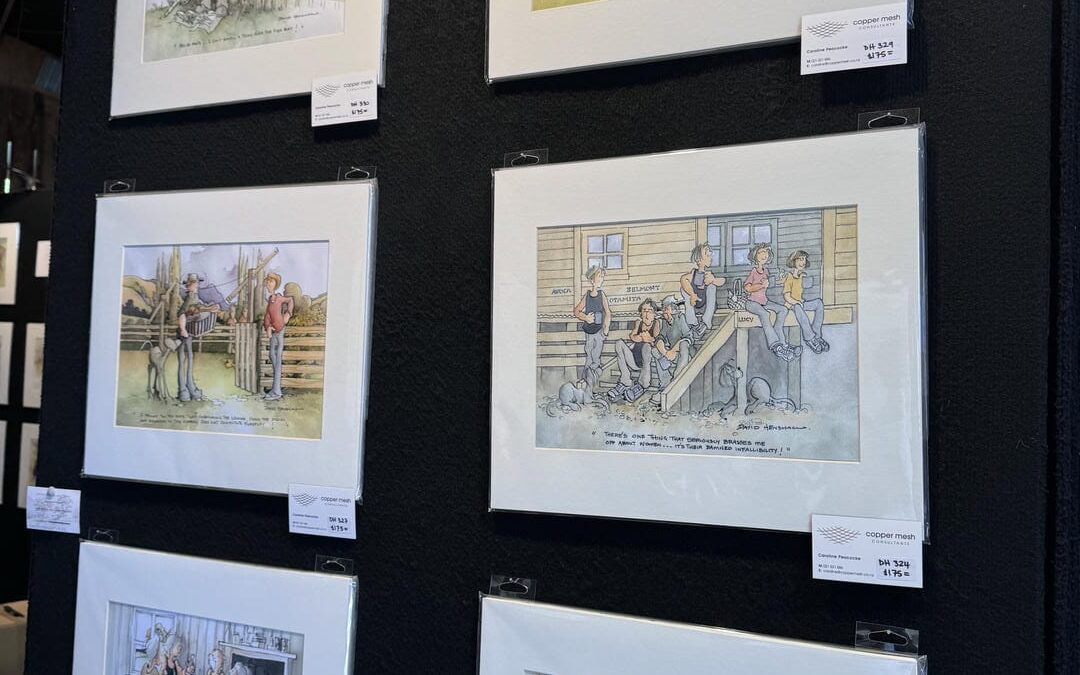
A creative shed at Field Days becomes the backdrop for a look into the legacy of David Henshaw, the cartoonist behind the rural favourite "Jock". There’s talk of iconic farming cartoons, the famous calendars, and a peek into a treasure trove of watercolor landscapes and pen-and-ink sketches.
The discussion covers curating a lifetime’s worth of art, the “skipped generation” of artistic genes, and what’s next for the collection.
Photos
Show Notes
This transcript was generated by an AI and may not be 100% accurate. It pays to listen to the podcast, but if you have questions about any of the information found here, please reach out to us.
Sam [00:00:21]:
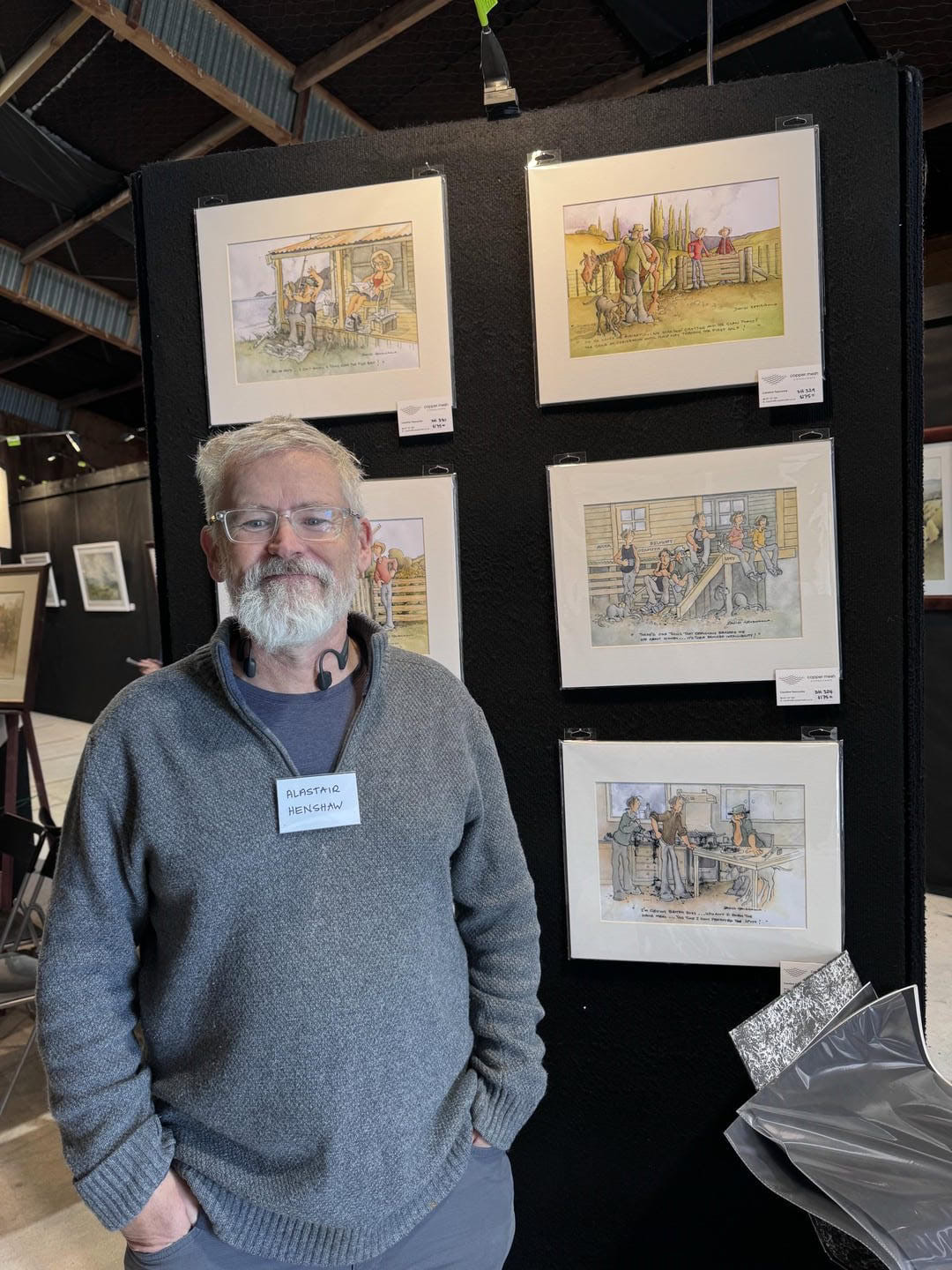
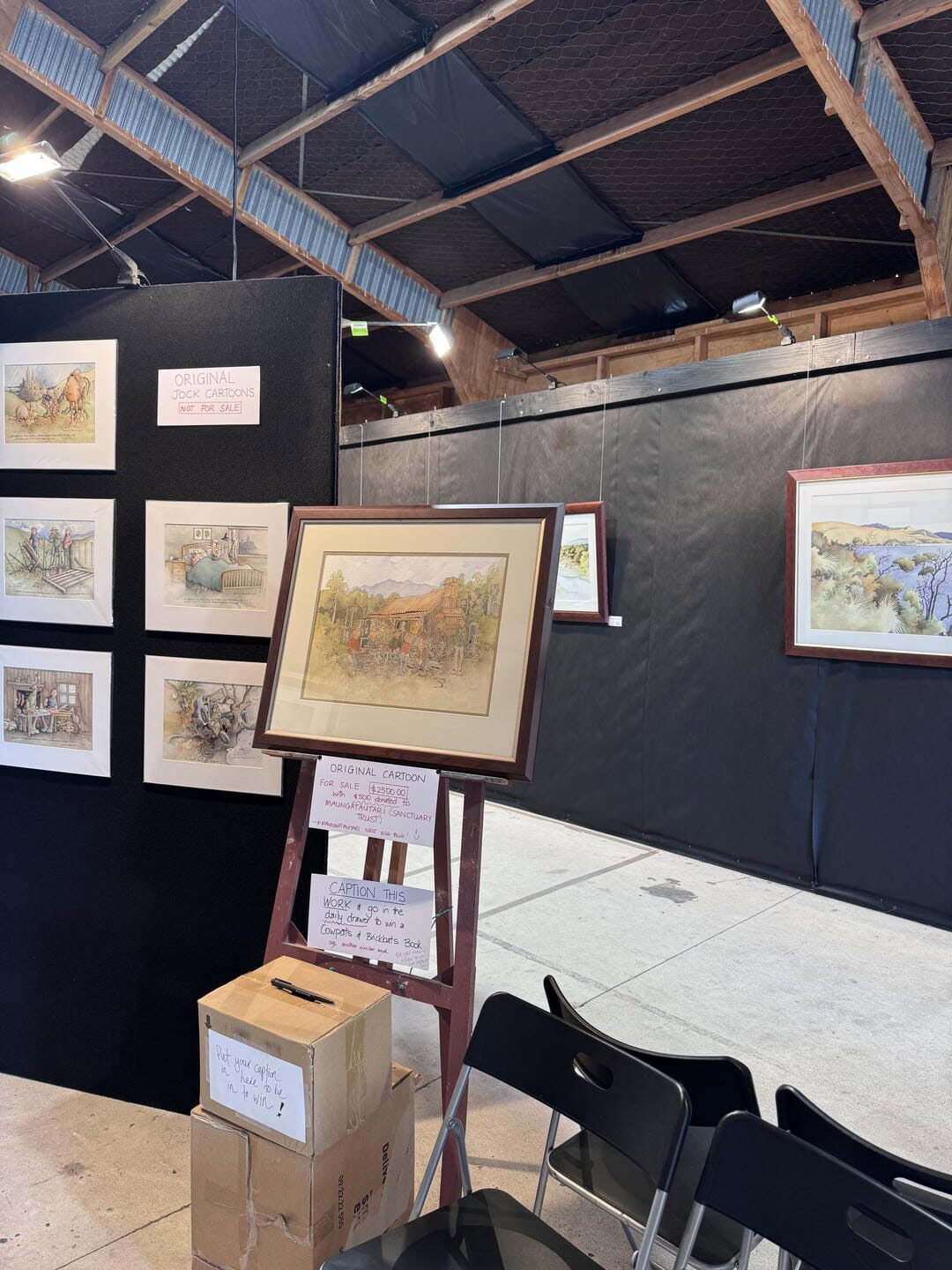
Hello and welcome to another segment at Field Days 2026. I have found my way into the creative area or creative space at Field Days or I have heard about this from a few people and it sounds like it's an amazing thing and looking around, it definitely is. A shed that used to hold old tools is now full of artwork and artwork, I guess, is that the term that will cover it all? I'm here with Alastair Henshaw. He's going to tell me all about it.
Alastair [00:00:44]:
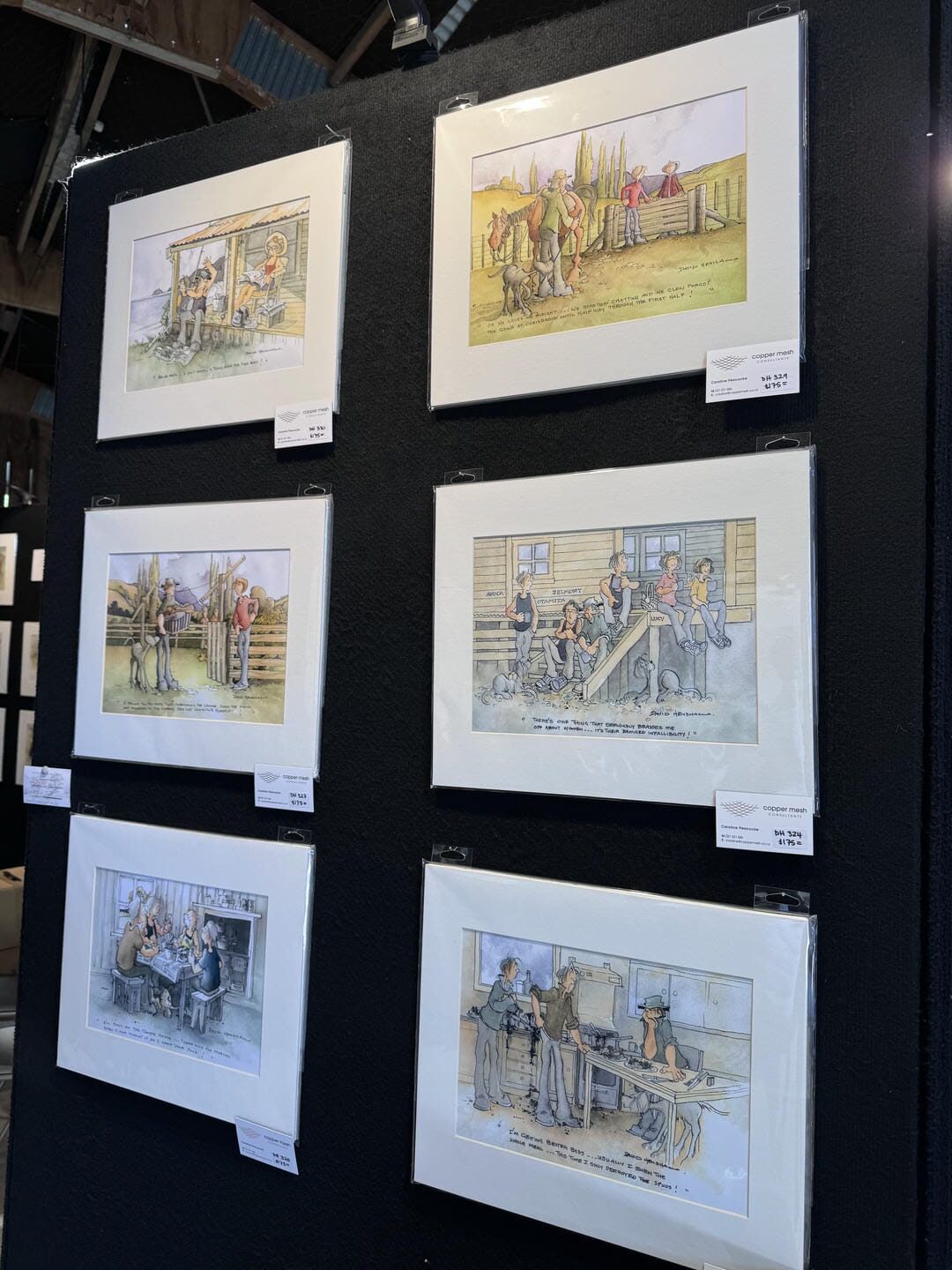
Yeah. Kia ora. Yes. So you found yourself in an exhibition. It is an exhibition of my late father's work. David Henshaw, most well known in the farming community for his cartoons. Jock was the name of the cartoon. So for 30 years, every two weeks he was putting a new cartoon into the New Zealand Farmer.
Alastair [00:01:05]:
And this was a hobby. This wasn't his full time job, but he was an artist at heart. And so we've had so many people come in and reminisce with my sister and I about the cartoons that they've seen because everybody had a calendar on their wall.
Sam [00:01:24]:
Oh, I've seen the calendars. I was like, the name sounds familiar but I can't picture it. But soon as you said calendar.
Alastair [00:01:31]:
Yeah, the calendars are a big one. So if you were a stock agent or a local bank or the local engineering firm, you would put, you would sell the calendar or give the calendar away to your customers. And that's how the rural community kind of were familiar with Jock. And they, the cartoons reflected their life back at them in a humorous way. So yeah, you know, that's always good.
Sam [00:01:55]:
You said just at the start that this wasn't a full time gig for your dad, but it was a long term passion of his. What was he doing for the full time job? Was he a farmer or something else?
Alastair [00:02:04]:
No, he worked for valuation New Zealand. So he was on farms as part of his job all day walking farms, talking to farmers in woolsheds, having coffee with stories, stories, getting the stories. And he was always taking out a little bit of paper and thinking, hmm, how am I gonna turn this into a cartoon? And then as well as the calendars, I think it was the calendar people were like, do you think you could colorize these cartoons? So he was like, I think I probably can. So he started dabbling in watercolors and then he started painting. And so this room is lined with probably 20 landscape watercolors originals he produced over the last sort of 20 years of his life.
Sam [00:02:50]:
They are stunning. They are showing amazing landscapes. My partner has dabbled a little bit in art and she loves the watercolor. I think I'm bringing her on Saturday. I have to bring her here. This is really cool. Now, what I'm looking at here, landscape wise, was there an inspiration for all of them or was he searching out new locations or are they all one area or was he just everywhere in New Zealand?
Alastair [00:03:13]:
Yeah. Many of the landscapes come from places he was familiar with. So he grew up in the Manawatu, lived in Kimboltin. So there are. There's the Rangitake river, there's the Manawatu River, Aurua River. But he also lived in Tamahiri, just stone's throw from where we are now. So there are scenes of Porongia, Manga, Tautri, and also we were always visiting down south, so you've got some of the classic sort of alpine scenes. One of the things, the other things that people don't really know about his artwork, if they know about, if they're lucky enough to know about the cartoons and they're lucky enough to know about the watercolors.
Alastair [00:03:54]:
He did hundreds of pen and ink sketches of buildings, everything from a humble woodshed that he just liked the look of, or a crumbling Central Otago stone cottage, through to Southland Boys High School sort of scale. So lots of pen and ink sketches as well.
Sam [00:04:18]:
How long ago was it since your father passed?
Alastair [00:04:21]:
It was 12 years ago. 12 years ago. And when we started moving stuff out, we realised that we had a huge challenge on our hands because he had. He was a great artist, but he was terrible at selling stuff. And so we had so many things to try and figure out, how to manage it. And when we got Caroline Peacock from Copper Mesh, we did an exhibition with her at Arts Post in Hamilton last year, and on the back of that field Days heard about David Henshaw and was like, what? He does landscapes? They were like, let's do a collaboration. So Caroline's been invaluable because she's been able to help us curate it. She's rematted some of these pictures.
Alastair [00:05:07]:
We've reframed them on her recommendations and, you know, what we're amongst now is a lot of hard work to bring it all together, because it's huge. There's so much stuff left and it's
Sam [00:05:19]:
amazing finding those people that have the expertise to help you with things like that, because you don't know what you don't know. So Alistair, is the artistic genes passed on to you?
Alastair [00:05:31]:
Well, this question has been asked many times over the last couple of days and I think like a lot of things, what's happened is it's skipped a generation. Oh, yeah, yeah. So I have two, I've got three sons, two of them are very artistic. My youngest son is just off to University Canterbury to do fine arts, so very excited about that. But my sister's two boys, one of them's a jeweller. So yeah, it skipped a generation.
Sam [00:05:58]:
What are the plans after field days or are you just focusing fully on field days and just see how it goes?
Alastair [00:06:05]:
Right now, Just focusing on field days. But I also said that at Arts Post for the exhibition last year, just focusing on that. I didn't think this was going to be an opportunity, but as we are learning more about how this all works, I think there will be another exhibition. Not only because there is a lot of stuff to share, but because there's a need for it. People are starting to learn about it. We're slowly getting our website up and running, so I think there'll be increasing demand for the work that's we've got left here still.
Sam [00:06:42]:
It's very exciting and the work like, speaks for itself, which is always amazing. And it's, you know, when people, when artists have another medium that people don't know about is always amazing to me because I've come across it in the past where people will know them for this one thing and then they're like, oh yeah, by the way, there's this other side of me or other side of this person.
Alastair [00:07:10]:
Yeah, that it's true. Because people. So we've got the cartoons front and center. Yeah. Because that's what gets people in. And they're like, oh, by the way, did you know? And they're like, what? Oh, and by the way, if you go to the end of the hall, there's all these pen and ink sketches. So they're amazed. Amazed.
Alastair [00:07:30]:
Yeah.
Sam [00:07:30]:
I'm going to go check out the rest of this hall in a sec after this. I highly recommend that you check them out if you can. You said the website's almost up and running or.
Alastair [00:07:41]:
David Henshaw art.
Sam [00:07:43]:
David Henshaw art. Go check that out. We'll have a link in the show notes for this as well. Thank you so much, Alistair, for taking the time talking to me.
Alastair [00:07:49]:
You're welcome. Thank you.
Where you can find us
Get Patreon Perks
Our Facebook Page
Visit us on Instagram
Chris’s Website
Sam’s Website