
Summary
Chris has been binging a Paris-based spy show, while Sam is battling the winter bugs.
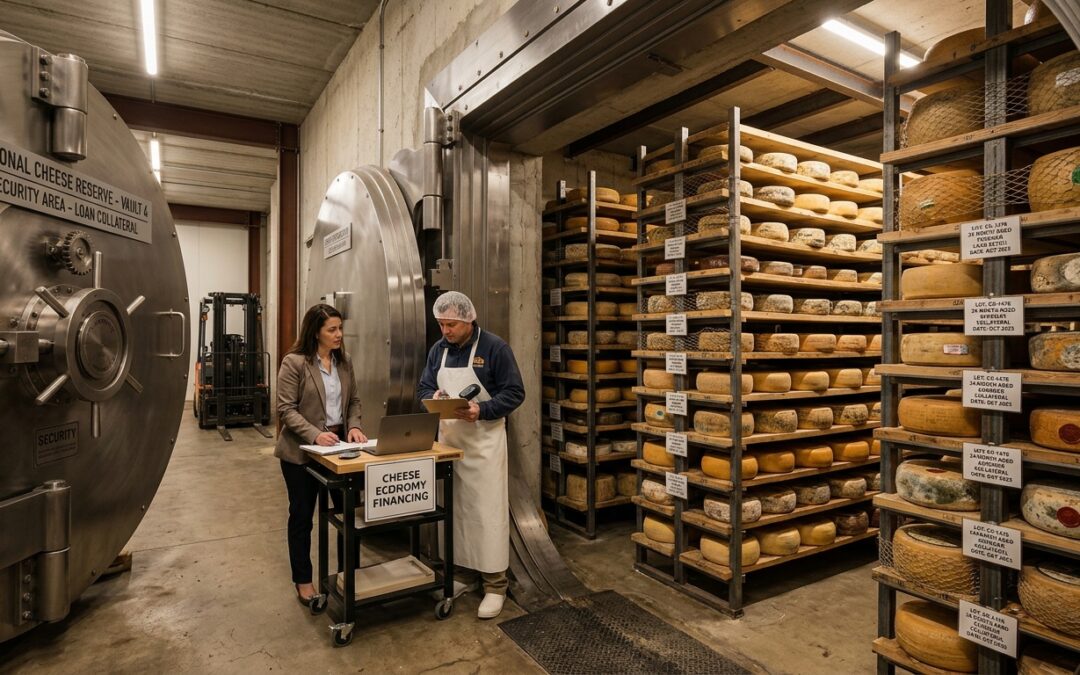
The conversation touches on the billion-dollar Italian cheese economy, with climate change threatening cheese banks and blockchain cheese loans causing confusion.
We hear about robots catching fire in a US artillery factory, AI mishaps killing a farmer’s crops, and some truly questionable Kickstarter inventions.
Links
General Dynamics Failed to Build Artillery Shells
Paris has Fallen
Disruption in the Cheese Economy
17 Strikes and you are off Facebook
Kickstart or Dropkick – EGOR
Kickstart or Dropkick – Roam Soda Top
Farmer Shouldn’t Trust AI
Stowaway.live
Show Transcript
This transcript was generated by an AI and may not be100% accurate. It pays to listen to the podcast, but if you have questions about any of the information found here, please reach out to us.
Sam [00:00:08]:
Hello and welcome to episode 593 of the Chris and Sam Podcast.
Chris [00:00:26]:
I’m Chris.
Sam [00:00:26]:
And I’m Sam. Welcome along to your weekly fix of randomness, technology, and life brought to you every week tcasp.com for the back catalog. What have you been up to?
Chris [00:00:35]:
Um, you— he’s caught me in my guilty pleasure. He walks into the room like, no, no, no, you can’t look. Uh, no, I’ve been watching—
Sam [00:00:42]:
That sounds terrible.
Chris [00:00:44]:
It sounds dodgy as. No, I’ve been binging Paris Has Fallen by, uh, and it’s on TV3, uh, you know, on demand or whatever. And it’s an 8-episode series and I’m like right at the end of episode 8. And I was like, ah, um, but yeah, no, it’s really good.
Sam [00:00:59]:
What’s it about?
Chris [00:01:00]:
Pretty impressed. Um, It really, it, you know, um, you know, spy stuff in Paris. It’s pretty much like—
Sam [00:01:08]:
Is it set in like World War II?
Chris [00:01:10]:
No, no, no, no.
Sam [00:01:10]:
Current.
Chris [00:01:11]:
Current.
Sam [00:01:11]:
Oh, cool.
Chris [00:01:12]:
Current. Um, it’s very much like 24, like it’s 24 vibes. Yeah, that sort of thing.
Sam [00:01:17]:
Okay.
Chris [00:01:17]:
Yeah. And it’s, there’s been quite a few twists in it and everyone lands on a bit of a, uh, a bit of a hang—
Sam [00:01:25]:
cliffhanger.
Chris [00:01:26]:
Yeah. I was like, Yeah, I, I love this.
Sam [00:01:28]:
So this is the first season?
Chris [00:01:30]:
Uh, I think so. Yeah.
Sam [00:01:31]:
Is there any more seasons?
Chris [00:01:32]:
I don’t know.
Sam [00:01:33]:
Oh, okay. Well, there we go. Check it out.
Chris [00:01:35]:
Yeah, check it out. It’s on at the moment.
Sam [00:01:37]:
So that’s been filling up your time a little bit?
Chris [00:01:39]:
Well, only last night and today.
Sam [00:01:41]:
Oh, okay. That’s good.
Chris [00:01:42]:
I’ve, I’ve, uh, had a quiet day today. It’s been really good. I was like, all right, I’m going to go and do some shopping. Uh, so I scooted down there, filled my bag.
Sam [00:01:51]:
That sounds like the worst thing.
Chris [00:01:52]:
You hobbled.
Sam [00:01:53]:
Oh yeah. Okay, good. I was going to say, seeing you hobble around, I can’t imagine the scooters.
Chris [00:01:57]:
And I mean, I scooted there. I had some lunch. I got, uh, you know, the wee house and that. I got, um, some shopping, 2 bags of shopping. Uh, I, I walked a little bit away from there because you can’t get an Uber like in front of the bus stop and all that sort of stuff.
Sam [00:02:15]:
No, that’s right.
Chris [00:02:15]:
And then I got an Uber home and I’m like, I’m shattered. I’m absolutely buggered with all that. Old age.
Sam [00:02:22]:
It’s problematic.
Chris [00:02:23]:
Yeah, whatever. Anyway, that’s, uh, that’s my exciting life. How about you? You’ve been sick.
Sam [00:02:30]:
Oh yeah, I was sick. Still a bit congested, which is not good. Uh, it’s all going around. It’s the joys of, I don’t know, winter office and people that have got small children that go to daycare. So there’s bugs everywhere. Been busy as at work and, uh—
Chris [00:02:44]:
Got new stuff?
Sam [00:02:46]:
Not yet. No. Uh, and Misty Flick stuff. Yeah. Chasing, chasing people down for files.
Chris [00:02:52]:
Lots of Misty Flick stuff. How’s the new trophy look?
Sam [00:02:55]:
Oh, I forgot to bring it.
Chris [00:02:57]:
Doesn’t matter. You don’t need to.
Sam [00:02:58]:
Uh, yes. Uh, yeah, it’s great. It’s identical to last year.
Chris [00:03:01]:
It is identical. I was hoping it would be.
Sam [00:03:03]:
There’s one bit though. I’m just not sure, but anyway.
Chris [00:03:06]:
Yeah. Yeah. Yeah.
Sam [00:03:07]:
So that’s about it. Uh, farmers shouldn’t trust AI. They’re all terrible. There’s more and more people putting this trust into AI. Yeah, it’s, I don’t know where this is going to go. We talk about it a lot on this podcast because there’s just random stories. Some people blindly trust AI because they think it’s telling you the truth. So this farmer in China has discovered the hard way, uh, when the chatbot told him to use a product and it basically killed his 25 acres of crops.
Chris [00:03:37]:
Sorry, I shouldn’t laugh because that’s probably not funny, but Yeah, that’s funny.
Sam [00:03:43]:
He followed the instructions blindly, failing to check, uh, that what he was doing was safe. And it wasn’t till the next morning that he shouldn’t have been so hasty. Um, all of his sesame seedlings were dead. He asked why this had happened, and it said it was because you used this, uh, this herbicide that I told you about earlier that kills broadleaf everything. Yeah. And it also says, hey, that product I told you about shouldn’t be sprayed broadly, should just be spot sprayed where you need it.
Chris [00:04:12]:
But he sprayed the whole thing.
Sam [00:04:13]:
But it never warned him about it. So he’s a bit upset.
Chris [00:04:17]:
And that’s interesting to me because, okay, first of all, he’s an older farmer.
Sam [00:04:22]:
Yeah.
Chris [00:04:23]:
Right. He’s in his 60s. Yeah. Um, and secondly, he, um, he’s in China because you, I don’t know, maybe it’s just me and my racist self, but I always think it’s dumb Americans that do crap like that.
Sam [00:04:38]:
I did read, I did sort of read that earlier and I thought it was in America until then I was like, oh, it’s China.
Chris [00:04:44]:
I know, exactly right.
Sam [00:04:46]:
So yeah, we’re basically— it’s a global pandemic of people blindly following AI. Yeah, it’s weird. I don’t know. You, you don’t see it because you don’t actually go anywhere for work or anything.
Chris [00:04:58]:
Well, I don’t leave the house.
Sam [00:04:59]:
No, but like, but, but in an office environment, the amount of people that just yell out, just use, use ChatGPT or use, um, Copilot.
Chris [00:05:08]:
Um, you do hear it all the time. No, I, I, yeah, no, you do. And I, I get on a lot of, um, webinars and things like that and meetings and stuff.
Sam [00:05:17]:
And people are always talking about, you know, there’s a presentation coming up for something and I’m not related. I’m not involved in it, but somebody else, well, I’m not saying things. And then somebody in another area or another department has gone through with AI. And I saw, and someone showed me the thing today and some of the pictures, like, you know, it’s AI, but it’s not good AI. Like, it’s like a pipe wouldn’t look like that. Why does it look like that? So I think we’re going to have to retweak it.
Chris [00:05:45]:
I’ve just been doing some more work with our friend Paul Spain. Oh, and he’s, he’s got another gig on. So he’s got some, some AI images. They are better though. They’re way better than what his old AI images were.
Sam [00:06:03]:
Yeah. Like they’re getting like, I mean, we can’t talk. I use AI images for almost every show. note image now because I can’t find a stock image or create the image of what I want.
Chris [00:06:17]:
Yeah, I know.
Sam [00:06:18]:
So that’s great.
Chris [00:06:19]:
Um, I’ve, um, I’ve got a, I’ve got something I wanted to talk about and it’s part, it’s not really the story. Like the story’s interesting, but the, it’s the thing behind the story that intrigues me.
Sam [00:06:31]:
Okay.
Chris [00:06:31]:
Okay. So the headline is Italy’s $4.7 billion cheese $4.7 billion cheese economy is feeling the heat as climate change threatens its cheese banks that hold Parmigiano cheese as loan collateral. And look at that photo of all these cheeses in this big warehouse, right?
Sam [00:06:56]:
Yep.
Chris [00:06:56]:
So I’m like, what’s going on? What? So I’m going to read this out. In the hills of Emilia-Romagna, a bank vault holds more than half a million wheels of Parmigiano Reggiano, worth well over €300 million. So what happens is this vault belongs to the bank Credito Emiliano, and it accepts young wheels of cheese as collateral for loans to dairy farms. And it’s been doing this since 1953. So the farmers create the cheese, but they can’t sell it for 10 years or some ridiculous amount of time. Yeah. Okay. get a loan from this bank and put the cheese in the bank.
Chris [00:07:40]:
If the farm defaults on the payments, then the bank gets to sell the cheese. Otherwise it stays in there. And these are huge warehouses, climate controlled and all that to keep this cheese ripe. But now—
Sam [00:07:56]:
It seems like a lot of hassle.
Chris [00:07:58]:
I know, it’s like this whole economy we didn’t even know existed.
Sam [00:08:01]:
But if you can’t sell the cheese, then the bank’s screwed. Or if something goes wrong with the cheese, you’re screwed.
Chris [00:08:08]:
But they’ve got a $4 billion industry in these. Yeah. Okay. Who would’ve thought? But now the extreme heat, because they’ve got this big heat wave over there, of course, is threatening Italy’s cheese banks.
Sam [00:08:21]:
Yeah.
Chris [00:08:22]:
Okay. And economists who study heat’s effects on growth say the exposure runs well beyond a single vault, but into the country’s vineyards, its olive groves, and its broader economy.
Sam [00:08:33]:
So would you have thought somebody talking about the problems with climate change would then lead to the cheese vault problem?
Chris [00:08:42]:
Oh, it’s got even worse because we’re humans, right? We can make things worse. So what’s got worse? The process has come a long way from the 1950s as blockchain technology now lets farmers pledge wheels even before, even while the cheese stays in their own facilities, doubling the cheese credence, the cheese banks lending capacity. So it’s like the futures market on blockchain with cheese.
Sam [00:09:12]:
I want to see these contracts. Imagine the contract.
Chris [00:09:16]:
I know, I know.
Sam [00:09:18]:
What would New Zealand’s version of that be? Like, what would you stockpile? Salt and vinegar chips?
Chris [00:09:23]:
Yogurt? I don’t know. I don’t know. No, it’s, I said it was ages, but it’s only 12 months to 24 or 36 months to cure it, age it, whatever you want to call it. Yeah. So anyway, but I just thought it was fascinating because I’d never heard of these cheese banks or anything. I was just like, that’s hilarious. Like humans, we can make weird shit out of anything.
Sam [00:09:46]:
You sure can.
Chris [00:09:49]:
Um, you say that like a visitor to the planet. You sure can.
Sam [00:09:54]:
Not at all. I don’t know what you’re talking about. Uh, there’s, but people make cool things. So this is sort of unrelated to what you were just talking about, but I came across this this week, stowaway.live. That’s the website you want to go to. It’s a little application. You allow it to have your, uh, location and then you can sort of look in the sky on this app and, oh.
Chris [00:10:20]:
This is the app that’s making that sound?
Sam [00:10:22]:
Yes, I believe so. I don’t think I’ve ever had my speaker on before, so that’s cool. But, um, uh, it shows you either satellites or planes that are flying above you.
Chris [00:10:33]:
Right.
Sam [00:10:33]:
But if you find a plane, you go, you click a button and then it puts you in the seat of the plane and shows you the view, like the Google Earth view of where that plane is above you. It’s very trippy.
Chris [00:10:47]:
That’s, that’s, yeah, trippy is a good word.
Sam [00:10:50]:
It’s very cool though.
Chris [00:10:52]:
own doing that, it’d be great.
Sam [00:10:54]:
Like there’s some satellites above us right now. Yeah, look, we can ride along with the SARCOM-1B, which is on the edge of, edge of space right now. There it is. That’s above us. The plane’s better though. The plane is like, oh, there we are.
Chris [00:11:11]:
Yeah.
Sam [00:11:11]:
Yeah. So anyway, stowaway.live, if you just want something to do on your phone.
Chris [00:11:17]:
Um, I wanted to talk a bit, a little bit about Meta because there’s a couple of things with Meta. So first of all, They’ve been fined, but—
Sam [00:11:24]:
Well, not enough because he’s still there doing stuff.
Chris [00:11:27]:
$500 million or something.
Sam [00:11:28]:
That’s nothing.
Chris [00:11:29]:
Yeah, it is.
Sam [00:11:30]:
What did he get fined for? I know it’s Meta, but I’m just going to say Mark Zuckerberg.
Chris [00:11:33]:
Yeah, yeah, yeah, yeah. It was, um, because the state, and I’ve forgotten which state it was now, um, Minneapolis, Minnesota, one of them, I don’t know. Um, one of them, um, has found that Meta is a nuisance, a public nuisance to all these teenagers.
Sam [00:11:54]:
Yeah.
Chris [00:11:55]:
Okay. So they’ve put a fine in and that money’s going to be used for things in the community. But this is what really cracked me up. And this is less rigorous investigation because it’s a post rather than a news thing, but I think it’s true.
Sam [00:12:12]:
I know. I know we’re up to— we normally have super high integrity and journalism standards around here.
Chris [00:12:18]:
Okay. So they have, so this is part of the stuff that was brought from one of the executives that sort of blew, was a whistleblower.
Sam [00:12:32]:
Yeah. At Meta.
Chris [00:12:32]:
Yeah.
Sam [00:12:33]:
Not the Kiwi lady that wrote the book?
Chris [00:12:36]:
No, I don’t think so.
Sam [00:12:37]:
Okay.
Chris [00:12:38]:
November 2025, a court document was made public containing testimony from Vasu Navi Jayakumar, a former Meta safety and wellbeing executive. According to her testimony—
Sam [00:12:52]:
Yeah.
Chris [00:12:53]:
This is what cracks me up.
Sam [00:12:54]:
Yeah, here we go.
Chris [00:12:55]:
Meta had what was referred to as a 17-strike policy for accounts involved in prostitution and sex trafficking. Her description was that an account could receive 16 violations for prostitution, sexual solicitation, Or sex trafficking, the account would only be removed after the 17th. 17 strikes and you’re out. No, no talking about that. 17th, you’re gone, buddy.
Sam [00:13:24]:
What a weird number.
Chris [00:13:25]:
I know, right? But, um, any— I mean, even 3 is bad. 17?
Sam [00:13:32]:
There’s got to be a reason behind that for that number. It’s not a good reason.
Chris [00:13:37]:
There’s no good reason for that number. Okay.
Sam [00:13:40]:
That’s weird. I’m trying to think what else he did just recently, but I can’t think of what it was now. He’s annoyed people some more.
Chris [00:13:46]:
Yeah, there was a bit of other noise and I was like, oh, I’m not putting anything in.
Sam [00:13:49]:
I can’t remember.
Chris [00:13:50]:
I’m just going to talk about the 17 strikes because that just, that was like, that can’t be real. And then it’s like, apparently it’s real.
Sam [00:13:56]:
I think he came up with some other silly idea that made no sense and they’re like, oh yeah, he was in the news about, yeah, talking about something because he doesn’t have—
Chris [00:14:03]:
He did another manifesto. That’s right. He’s done another manifesto because he loves his manifestos and it’s I, I heard some pundits going on about it and going, uh, that makes no sense.
Sam [00:14:15]:
Yeah, because he hasn’t really come up with any original ideas ever, and he doesn’t really know what he’s— no, he hasn’t ever. No, no, he’s copied a lot of things and somehow stumbled into it.
Chris [00:14:26]:
But he gets paranoid when he thinks he’s going to be made irrelevant, and that’s why he jumped on Meta.
Sam [00:14:32]:
I mean, the metaverse.
Chris [00:14:33]:
Metaverse. Yeah. Uh, VR, that’s the word. And then he’s jumped on AI and spent a bunch of money on that because, oh no, I’m going to be Oh, but it’s like 28 years old now.
Sam [00:14:44]:
That’s what’s that? He’s older than that, isn’t he?
Chris [00:14:47]:
No, the Facebook is 20.
Sam [00:14:48]:
Yeah.
Chris [00:14:49]:
Yeah.
Sam [00:14:49]:
Yeah. Yeah.
Chris [00:14:50]:
Yeah. Yeah.
Sam [00:14:50]:
Yeah. I remember when it came out.
Chris [00:14:51]:
Yeah.
Sam [00:14:52]:
No, that’s right. He’s made a ploy or an idea, or maybe it’s the manifesto to try and get Facebook to somehow be like Microsoft, I think is the gist of it. So I think he wants to have services or platforms or software like Microsoft. And they’re like, you’re not that. You’re a social media platform that you can leave it if you want to. But anyway, that’s fun. I’ve got Kickstarter Dropkick. I got Kickstarter Dropkick for you this week.
Sam [00:15:27]:
And I went over them with Sarah last night and she raged out so much. I was just like, what is going on? And I just kept going. I said, this is a real thing. She goes, no, this can’t be real. It’s got to be AI.
Chris [00:15:40]:
Does she not listen to this podcast? Not at all. Has she not heard of the, um, what was it? The sperm races stuff?
Sam [00:15:47]:
No, no, that, no.
Chris [00:15:48]:
All sorts of stuff that, yeah. All right.
Sam [00:15:49]:
I know. I think she has heard of that. So this is, I’m going to show you a video as well and you can describe what’s going on in this. So imagine, and it helps a bunch of different people, so it helps a busy dad with kids running around. It helps people that are short on time, executives. It helps a person that’s hungry because there’s a person rubbing their stomach in this video. There’s a woman with arthritis and it helps them.
Chris [00:16:14]:
Oh, yay, that’s me.
Sam [00:16:16]:
Yeah, and it helps them in the morning. Any guesses to what I’m going on about?
Chris [00:16:21]:
No.
Sam [00:16:21]:
What happens if I told you it was called E-G-O-R?
Chris [00:16:26]:
Egor. Oh, it’s a manservant.
Sam [00:16:30]:
It’s a breakfast robot that cooks eggs 7 ways.
Chris [00:16:34]:
Okay.
Sam [00:16:35]:
And so I’ll show you this video. Can I go full screen?
Chris [00:16:40]:
Eggore. That’s pretty good naming, actually. I’m quite happy with Eggore.
Sam [00:16:44]:
You can describe what this thing looks like.
Chris [00:16:45]:
Okay. It looks like, it looks like if an Alexa decided to be a cook. I don’t know. It looks a little bit like a slim-lined, very flash looking. It’s got to be an AI image.
Sam [00:17:00]:
No, it’s not. It’s not. It’s a real thing.
Chris [00:17:03]:
Of a, like a coffee. It looks like a coffee machine with an egg in it.
Sam [00:17:06]:
You poke an egg into the hole and then the machine can crack the egg itself and start cooking it. Now, the cool thing is there’s a toaster you can buy with this as a package and they talk to each other. So you can set this up at nighttime. And that’s when Sarah started raging a bit. She goes, why would you leave bread out overnight? What about the Anson stuff?
Chris [00:17:27]:
She’s got the wrong idea. Of course you leave bread out overnight. It’s going to get toasted and it won’t matter.
Sam [00:17:35]:
If you can’t crack an egg or organize your breakfast, you don’t deserve this machine, I think was a statement that I heard last night. But they can talk to each other and they can sync. So this machine will crack the egg and start cooking it. however you want it, got multiple attachments, could do different ways. And then the toaster—
Chris [00:17:51]:
Oh, so that’s not the whole machine, there’s attachments to the machine?
Sam [00:17:55]:
Well, there’s just like different pans and there’s like an omelette pan thing.
Chris [00:17:59]:
Oh yeah.
Sam [00:17:59]:
Yeah, so you get the gist of it there.
Chris [00:18:02]:
It seems pretty dumb.
Sam [00:18:03]:
Well, you know—
Chris [00:18:06]:
Other than the name, Egor is a very good name.
Sam [00:18:09]:
There’s 15 days to go and I’m going to give you the pack because I told her the package price for just the machine. And then she goes, well, why would you get just the machine and not the toaster? And then I told her the combined package price for early bird. And she was like, what is wrong with the world? Uh, think about that.
Chris [00:18:25]:
Welcome to my world, Sarah.
Sam [00:18:27]:
That’s right. Oh, why is it not defaulted to New Zealand? We like New Zealand. Oh, it doesn’t ship to New Zealand. That’s all right.
Chris [00:18:35]:
Oh, do it in US currency.
Sam [00:18:37]:
Oh no, here’s New Zealand prices. Good. So this is a 43% off the retail price. You get the Egor thing and the toaster. Toasters without an E on the end. Toast R. Yeah, of course. Uh, how much do you expect to buy one of these? Early birds prices.
Chris [00:18:51]:
$300.
Sam [00:18:53]:
$300? No, $685 New Zealand dollars.
Chris [00:18:56]:
Geez, I thought $300 was too much. Like, $600? So anyway, nobody’s gonna buy that.
Sam [00:19:02]:
Okay, they want to raise $171,000 New Zealand.
Chris [00:19:07]:
Who’s gonna buy that?
Sam [00:19:08]:
I thought that was a good amount because it does look like it’s got a bit of engineering in it. So like the money that they raised.
Chris [00:19:14]:
Yeah, because they need something because all they’ve got is an AI image of what it might look like.
Sam [00:19:18]:
It’s not AI, it’s real.
Chris [00:19:21]:
I am not convinced by that.
Sam [00:19:23]:
It’s made by Sheffy. You know it’s good if Sheffy’s making it.
Chris [00:19:28]:
All I know is they’ve got a good naming convention.
Sam [00:19:30]:
That’s all I know. They want $171,000. How much have they raised?
Chris [00:19:35]:
$2,000.
Sam [00:19:36]:
$1.5 million.
Chris [00:19:39]:
No. Now I can see why Sarah raged out. That is stupid. No, that’s stupid. That’s the stupidest thing I’ve ever heard.
Sam [00:19:51]:
No, that’s, that’s exactly how she reacted.
Chris [00:19:59]:
No.
Sam [00:20:00]:
Okay.
Chris [00:20:01]:
So I mean, I know chefs say, oh, eggs are the hardest thing to make. But they’re not really, right? Because you just make something and you eat it and it doesn’t taste like that great, but it doesn’t taste that bad and you’ve eaten it and it’s good.
Sam [00:20:14]:
Okay.
Chris [00:20:15]:
That’s my cooking anyway.
Sam [00:20:16]:
This one she wasn’t too keen on, but not as against it as the eFam.
Chris [00:20:21]:
1.5 million. Oh, Jesus. All right, go on.
Sam [00:20:24]:
This is called the Roam Soda Top. Make sparkling water anywhere, anytime. Insulated drink bottle with a thing on top. Which has a CO2 canister, push down within 3 seconds, fizzy water. That’s it.
Chris [00:20:38]:
Not, not my cup of tea, but I can see that being—
Sam [00:20:40]:
Yep, comes with some flavors. You get a whole bunch of, um—
Chris [00:20:43]:
Oh, that’s even better.
Sam [00:20:44]:
Yeah, it’s got like little drops and stuff.
Chris [00:20:46]:
Do you put the flavors in like the CO2? It’s all—
Sam [00:20:49]:
Nah, it goes in the water.
Chris [00:20:51]:
So you pour it in first and then you, yeah, okay.
Sam [00:20:53]:
Yep. So, uh, to back this, one set. I thought it was pretty good because, um, you get 60 cartridges and 4 packages of flavor. I thought it was pretty decent. Um, $205 New Zealand dollars. You wouldn’t pay that, but no, that’s not the worst thing. Yeah, but I’m like, I guess if you want fizzy water, that makes sense. I don’t know.
Chris [00:21:18]:
There are some people that really don’t like still water.
Sam [00:21:21]:
Yeah, sure.
Chris [00:21:21]:
They’re weird, but Oh, okay, good. I’m glad with that.
Sam [00:21:24]:
15 days to go. They only want to raise $17,000. It’s basically a drink bottle with this extra little attachment. That makes sense. $17,000 New Zealand.
Chris [00:21:33]:
All right.
Sam [00:21:34]:
How much have they raised?
Chris [00:21:35]:
How many, how long to go to?
Sam [00:21:36]:
Sorry. Uh, 15 at the time of recording.
Chris [00:21:39]:
Okay. So, um, $200 each. Oh yeah, they’ll, they should be well over the $17,000 if they’re doing that. Yeah, I’d say they’re at $100,000. I don’t want them to be at $100,000, but I’m going to say $100,000.
Sam [00:21:53]:
Okay. They’re not. They’re at $477,000.
Chris [00:21:56]:
Oh, good God. You’re killing me here. $1.5 million for the egg thing. That’s just ridiculous.
Sam [00:22:02]:
I think that egg thing, like, is one of those things that may or may not come to market. And then if it does come to market, they’re going to be like that, um, what was that squeezy one? The juice thing? You gave it a pouch and it squeezed the pouch and you might as well just squeeze the pouch by hand. This will end up being like, I just cooked it myself because the machine—
Chris [00:22:19]:
They’ll just be sitting everywhere. You’ll be able to get them on eBay for $2 each or something. I mean, it’s—
Sam [00:22:25]:
I just don’t think they’re going to sell that many, to be honest.
Chris [00:22:27]:
Ridiculous. I’m going to share something. This is a ProPublica thing. So ProPublica does investigative journalism.
Sam [00:22:36]:
Yeah.
Chris [00:22:37]:
And I just thought this, I do like the way it was written, to be honest. I love the first line. A robot was on fire again.
Sam [00:22:48]:
Okay.
Chris [00:22:49]:
It’s the summer of 2024 and the cutting-edge robots inside General Dynamics’ sweltering artillery factory near Dallas were catching fire with startling regularity. Startling regularity is not the adjectives you want to use for robots catching on fire.
Sam [00:23:07]:
That are in what? What was the division? It’s an artillery factory.
Chris [00:23:12]:
Artillery, okay. According to 4 former workers there, this was not ideal.
Sam [00:23:19]:
They’re making artillery?
Chris [00:23:20]:
Yeah, they’re making artillery. Okay.
Sam [00:23:22]:
Which in theory makes sense.
Chris [00:23:24]:
Yeah, no, this was not ideal as the plant was supposed to be churning out urgently needed artillery shells for Ukraine.
Sam [00:23:31]:
Okay.
Chris [00:23:32]:
The robots, giant metal arms with clamps for hands, would end up drenched in oil, which would then, no surprise, combust as they moved steel blocks heated to 1,800 degrees into and out of a machine that periodically erupted columns of fire.
Sam [00:23:50]:
Okay. But that sounds like—
Chris [00:23:51]:
okay, but so the whole point of this, I mean, it goes on a bit and it’s, I just love the writing. It’s just really good. But the whole point of this, let me, oh, where is it? Oh, and there are photos, video, I mean.
Sam [00:24:06]:
Oh yeah, that’s awesome.
Chris [00:24:08]:
So the US— actually, I’ll go to the bullet points, it’s easier. Yeah, so the US paid to set this up in conjunction, so in a rushed process exempted from normal rules because—
Sam [00:24:25]:
Military. Oh, Trump, yeah.
Chris [00:24:27]:
Trump, military, whatever. The Army hired General Dynamics, which brought on a Turkish subcontractor With little vetting to make the artillery shells. They paid them $533 million.
Sam [00:24:42]:
Yeah, bargain. Bargain.
Chris [00:24:43]:
General— and, uh, at the end of this, General Dynamics did not produce a single usable shell at this new factory and has never been held publicly accountable.
Sam [00:24:56]:
Oh my gosh. And you’re feeling bad about the $1.5 million for an egg machine. Don’t worry about that.
Chris [00:25:03]:
Oh, I know where this guy used to work. Since the Army ordered 2 production lines at the factory, the General Dynamics units responsible for the debacle has received a contract— contract awards totaling— so they’ve already done this, but General Dynamics—
Sam [00:25:20]:
They’re going to do some other stuff.
Chris [00:25:21]:
Yeah. $2.5 billion. Give them an extra $2.5 billion because you can’t do much with $533 million. What were we expecting here? Have another couple of billion. Um, they’re just, they’re battlers.
Sam [00:25:33]:
They’re getting there. Okay, they’re gonna get there in the end. It’s fine. But it is like— That’s not the robot fault. It comes down to humans because you should be able to get robots to do that.
Chris [00:25:43]:
Well, yeah, and it makes sense that you would get robots to do that, but obviously they haven’t like thought this through.
Sam [00:25:50]:
Um, well, I don’t think the Turkish guy knew what he was doing.
Chris [00:25:53]:
No, no. Um, but maybe He should have done the reflection pool and that reflection pool dude, maybe he would have been better doing the artillery shell robots.
Sam [00:26:04]:
But is this one of those things where they’re like, hey, we’re going to give you all this money and you’re like, yep, I’ll figure it out as I go.
Chris [00:26:09]:
Honestly, I think that’s how all government contracts seem to work in the US.
Sam [00:26:15]:
Yeah, maybe. They’re just like, ah, what’s going to happen in the end? Not much.
Chris [00:26:19]:
Anyway, uh, we’ll put a link to that, uh, story, the ProPublica, because it’s worth the read because I just love the way it’s written. It’s so… Yeah, it’s so funny. I found it funny anyway.
Sam [00:26:29]:
Well, that’s cool. So this thing’s happened in Australia and I saw the headline and I don’t know if it’s for everyone or not, but they’ve now come out with a world-leading decision. The Fair Work Commission in Australia has issued a new minimum standard for gig workers, mainly like delivery drivers. They’re going to get paid $31.30 an hour. Um, and insured for injuries and on the job. So they’ve come up with this massive agreement, which is crazy. Do you think they’ll do that here? Probably not.
Chris [00:27:02]:
Where was that?
Sam [00:27:03]:
Australia.
Chris [00:27:04]:
Australia. Well, they do lots of good stuff in Australia and we have, what do we call them? We call them, I think the polite term is politicians, but there are a lot less polite terms that, um, we call them in New Zealand often.
Sam [00:27:19]:
Yeah. So Uber Eats, uh, and DoorDash have said the new standards would provide an industry-wide safety net for hundreds of thousands of workers, but who’s going to be paying all this money? Like somewhere along the lines, it’s going to be reflected in what the consumer pays, I guess.
Chris [00:27:36]:
Yeah.
Sam [00:27:36]:
Which is a way, like, I get it, but also, I don’t know. Some comments on this story though was interesting. They were like, oh, almost all the places that you can get Uber and that from over there, they’ve got their own delivery drivers. So you can just ring the store directly and go, hey. And they’re like, yeah. And they’ll just deliver it cheap as.
Chris [00:27:56]:
Yeah. ‘Cause the, the, the driver—
Sam [00:27:57]:
they don’t have all these fees.
Chris [00:27:58]:
The delivery drivers work for both most of the time. And it’s just which one ring you ring, which number you ring.
Sam [00:28:04]:
No, the, no, there’s people that work for the store, but not the delivery companies. Yeah.
Chris [00:28:09]:
I, okay. If it’s anything like here, you’ve got, I got picked up by an Uber driver the other day.
Sam [00:28:14]:
How many phones did he have on the go?
Chris [00:28:15]:
In a taxi.
Sam [00:28:17]:
Yeah.
Chris [00:28:17]:
Yeah. It’s like, he’s obviously a taxi as well as an Uber driver at the same time.
Sam [00:28:22]:
Blur line there.
Chris [00:28:23]:
Yeah. And I think there’s a few like that. So I would, I would imagine the same thing happens with deliveries, but who knows? I mean, yeah. Um, you’d have to be a pretty busy restaurant to be a full-time delivery person for that restaurant. But if you were like in a food court or a thing and you do deliveries for everybody in the place, that makes sense. You know what I mean?
Sam [00:28:44]:
Yeah.
Chris [00:28:44]:
Um, but yeah, if it’s one, one takeaway, one restaurant that I think that’d be bit hard to be a full-time delivery driver.
Sam [00:28:52]:
Yeah. So this episode, Chris, has come to an end. We’ve solved all the problems, robots that’ll make you eggs, robots that’ll explode trying to make ammunition, uh, or artillery. And, um, yeah, all that good stuff.
Chris [00:29:07]:
So what’s coming up?
Sam [00:29:08]:
I don’t know.
Chris [00:29:12]:
You look like you don’t care.
Sam [00:29:13]:
I’ve, I’ve been at work a long time today. And I think tomorrow’s a long time too.
Chris [00:29:17]:
Uh, I mean, well, normally Sam gets here and we have a bit of a chat before he starts. He walks in, sits down, gets the microphones, like, we’re going in 10, 9, 8. Not quite like that, but it felt like that. So, uh, yeah, it sounds like it’s been a tough day, bro.
Sam [00:29:33]:
Just been busy. I mean, there’s only so many times I can ring a help desk.
Chris [00:29:37]:
Okay.
Sam [00:29:38]:
I’m on a first name basis with these people. Not my fault. Things are broken. Uh, until next time, I’m Sam.
Chris [00:29:45]:
I’m Chris.
Sam [00:29:46]:
See ya.
Chris [00:29:46]:
Bye.
Where you can find us
Get Patreon Perks
Our Facebook Page
Visit us on Instagram
Chris’s Website
Sam’s Website